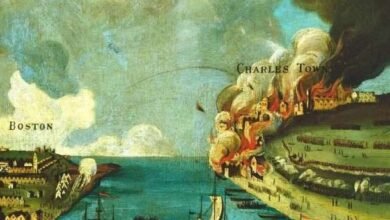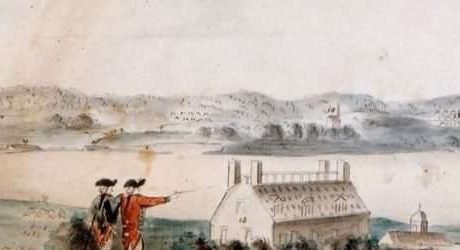
 The American Revolution was as much an environmental conflict as a political one and it wasn’t only people who shaped the War of Independence — or bore its consequences. The natural world also made its mark on the course of the war, while experiencing changes because of it.
Armies constantly waged war on and with the land, as survival depended on local resources like firewood, forage, and water. This “military metabolism” altered ecosystems, while harsh terrain and disease often proved as deadly as combat.
Many of us give only a moment’s thought about the environment when considering the War of Independence: the slope of Breed’s Hill, the ice-choked Delaware River, and diseases such as smallpox.
But what might we gain by connecting biology, ecology, and geology to the thinking and actions of soldiers and civilians?
David Hsiung of Juniata College and Joyce Chaplin of Harvard University will discuss the intricate and often surprising ways in which the natural environment and the war were interconnected, from food and fuel to deforestation and shifting animal populations during “Curious & Complex Connections: Environmental History & The War of Independence,” an online presentation by the Massachusettes Historical Society on Wednesday, May 27, 2026.
This event will take place in-person in Boston and virtually, beginning at 6 pm ET on Wednesday, May 27, 2026.
Illustration provided.
Source link