You found the dress. The color is right, the style works, but the fit isn’t quite there. Maybe the hem is too long, or the straps keep slipping, or it’s slightly loose through the waist. Before you assume you need a professional tailor for every adjustment, it’s worth knowing which fixes you can handle yourself and which ones are better left to someone with experience.
Some alterations are genuinely simple. Others can permanently damage a dress if they go wrong. Knowing the difference saves you time, money, and potentially a dress you love.
Alterations You Can Do at Home
-
Hemming a simple, single-layer dress. If your dress has a straight or A-line hem in a stable fabric like cotton, jersey, or crepe, shortening it is one of the most approachable DIY alterations. Measure carefully with your shoes on, pin evenly, and use a matching thread with a simple blind hem stitch. Iron-on hem tape is another option for fabrics that respond well to heat, though it’s less durable than stitching and not ideal for anything you plan to wear more than once or twice.
-
Taking in side seams slightly. If a dress is a little loose through the waist or hips, you can pin along the side seams, try it on to check the fit, and sew a new seam just inside the original one. This works best when the adjustment is small, no more than about half an inch on each side. Anything more than that starts to change the overall shape of the dress in ways that are hard to control without pattern-making knowledge.
-
Shortening or adjusting straps. Straps that slip off the shoulder are one of the most common fit issues, and often one of the easiest to fix. If the straps are simple and sewn into the bodice, you can detach them at the back, shorten to the right length, and reattach by hand. Take your time with this one. Even a quarter inch makes a difference in how the dress sits.
-
Adding bust cups or padding. If a strapless or low-cut dress needs a little more support or structure, sewing in removable bust cups is a straightforward fix. They’re inexpensive, widely available, and can be hand-stitched into the interior lining in a few minutes. This small change can make a strapless dress feel significantly more secure.
-
Emergency fixes. Fashion tape for a neckline that gaps. A safety pin tucked inside a waistband for a quick temporary take-in. A few hand stitches to reattach a loose hook or secure a dragging hem before an event. These aren’t permanent alterations, but they solve real problems in the moment and require no special skills.
When to See a Tailor
-
Anything involving structured fabrics or boning. Corset bodices, internal boning, and heavily structured gowns are engineered pieces. Adjusting them without understanding how the structure works can compromise support, change the silhouette, or create visible puckering. If your dress has boning or built-in structure, a tailor who works with formalwear is the right call.
-
Bodice alterations beyond basic strap adjustments. Taking in or letting out a bodice involves working around darts, seams, linings, and sometimes boning or cups. The fit across the bust is one of the most visible parts of any dress, and even small errors show immediately. A professional can reshape a bodice while keeping everything balanced and symmetrical.
-
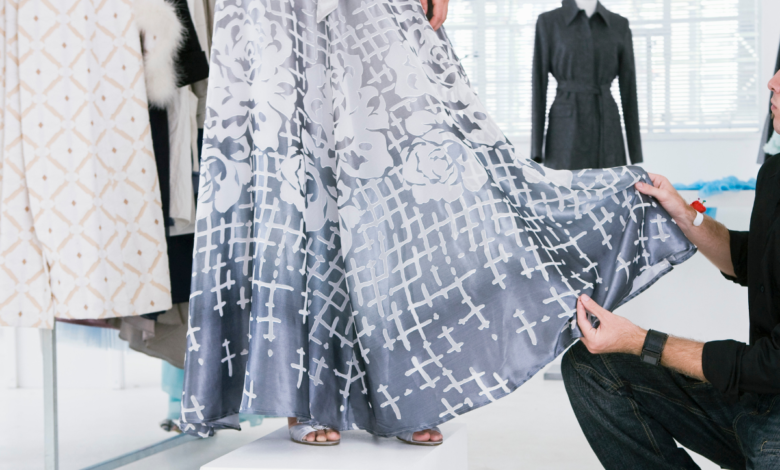
Working with delicate or specialty fabrics. Silk, chiffon, satin, lace, tulle, and beaded fabrics all behave differently under a needle. Silk can pucker. Chiffon shifts. Satin shows every pin mark permanently. Beaded and sequined fabrics require careful handling to avoid pulling threads that unravel entire sections. If your dress is made of something delicate or expensive, professional handling protects your investment.
-
Hemming a multi-layer or lined dress. A dress with multiple layers of tulle, a chiffon overlay, or a structured lining is a very different hemming job than a single-layer cotton dress. Each layer needs to be measured and cut separately, and the finishing has to be clean on every edge. This is where DIY hemming goes wrong most often.
-
Reshaping the silhouette. Wanting a dress to fit differently through the hips, or converting an A-line to something more fitted, or adjusting how a skirt flares involves recutting and restructuring. These are significant changes that require experience with garment construction. A skilled tailor can often do more than you’d expect here, but it’s not something to attempt at home.
-
Zipper replacement or repair. Zippers in formal dresses are usually invisible zippers set into delicate fabric. Replacing one requires a specific presser foot, careful alignment, and experience with the fabric type. A broken or stuck zipper is almost always a tailor job.

Practical Tips for DIY Alterations
-
Work slowly and pin thoroughly before cutting anything. Try the dress on multiple times during the process.
-
Hand stitch rather than machine stitch on formalwear when possible. It gives you more control and is easier to undo if something isn’t right.
-
Cutting fabric is permanent. If you’re unsure about a hem length or strap adjustment, err on the side of leaving more material. You can always take more off.
-
Consider what the dress is worth to you. A twenty-dollar adjustment at a tailor is a small price for peace of mind on a dress you plan to wear to an important event.
Finding the Balance
The best approach is knowing your limits honestly. Simple fixes like hemming a basic dress, shortening straps, or adding cups are well within reach for most people with a needle and thread. But the moment a dress involves structure, delicate fabric, or precision fit across the bust or waist, a professional will almost always deliver a better result.
There’s no shame in either direction. Doing it yourself when it makes sense is resourceful. Knowing when to hand it off is smart.
Browse evening dresses, prom dresses, and formal gowns at NewYorkDress to find styles worth perfecting. And if you’re local, book an appointment at the NYC boutique where the team can help you find a dress that needs as little alteration as possible.