A great dress deserves more than a crowded closet and a wire hanger. Whether it’s a prom dress you want to keep for sentimental reasons, an evening gown you plan to wear again, or a wedding dress you’re preserving for the future, how you store it determines whether it’s still in beautiful condition when you take it out months or years later.
Most damage that happens to formal dresses doesn’t happen while wearing them. It happens in storage. Yellowing, fabric weakening, creasing, mildew, moth damage, beading deterioration. All of it is preventable with the right approach. And the right approach doesn’t require anything expensive or complicated. It just requires a little intention.
Clean It Before You Store It
This is the most important step, and the one people skip most often. A dress that looks clean can still have invisible residue on it: body oils, perspiration, deodorant, perfume, makeup, or drink splashes that didn’t leave a visible mark. Over time, these residues oxidize and cause yellowing, discoloration, and fabric degradation that’s difficult or impossible to reverse.
If the dress is made from a delicate fabric like silk, satin, chiffon, or lace, or if it has beading, sequins, or embroidery, take it to a dry cleaner who specializes in formalwear or bridal gowns. Not every dry cleaner handles embellished garments well, so ask specifically about their experience with formal dresses before handing it over. Request the hydrocarbon or GreenEarth cleaning method if available, as these are gentler on delicate fabrics and embellishments than standard perchloroethylene.
For dresses in sturdier fabrics like jersey, crepe, or unembellished polyester blends, a gentle hand wash in cool water with a mild detergent can work. Turn the dress inside out, wash with a soft plunging motion rather than rubbing, rinse thoroughly, and let it air dry flat or on a padded hanger away from direct sunlight.
Never store a dress that hasn’t been cleaned. Even if you only wore it for a few hours, the residue is there.

Hanging vs. Folding vs. Boxing
How you store the dress depends on its weight, fabric, and how long it’s going away.
Hanging works well for shorter-term storage and for dresses that are lightweight enough that gravity won’t stretch them out. Chiffon, crepe, and unembellished satin dresses can be hung safely as long as you use the right hanger. A padded, wide-shouldered hanger distributes the weight evenly and prevents the shoulder area from being stressed or dented. If the dress has hanging loops inside, use them. They’re there specifically to support the garment’s weight from points that won’t distort the shape.
Never use wire hangers. They create pressure points that can leave permanent creases, stretch delicate straps, and even rust over time, staining the fabric.
Folding is better for heavily beaded or embellished dresses that are too heavy to hang without risking stretching or distortion. The weight of beading and sequins can pull on the fabric over time, especially at the shoulders and neckline. Fold the dress loosely along its natural seams and layer acid-free tissue paper between each fold to prevent creasing and to keep embellishments from pressing against each other.
Boxing is the gold standard for long-term storage, especially for wedding dresses and gowns you want to preserve for years. Use an acid-free archival box and line it with acid-free tissue paper. Fold the dress as loosely as possible, stuffing the bodice and sleeves with tissue to help maintain their shape. The acid-free materials prevent the chemical reactions that cause yellowing and fabric breakdown over time.
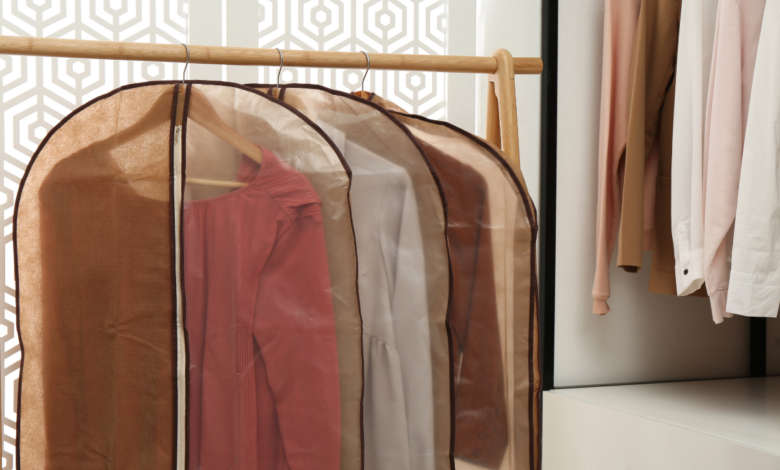
Avoid plastic garment bags for long-term storage. Plastic traps moisture and doesn’t allow the fabric to breathe, which can lead to mildew, yellowing, and a musty smell that’s hard to remove. A breathable cotton or muslin garment bag is a much better option if you’re hanging the dress.
Protecting Specific Fabrics and Details
Different materials have different vulnerabilities in storage, and knowing what to watch for helps you avoid the most common issues.
Silk is prone to yellowing and weakening when exposed to light, heat, or moisture. Store silk dresses in complete darkness, in a cool and dry environment. Avoid folding silk along the same lines for extended periods, as the creases can become permanent. Refold periodically if long-term storage is necessary.
Satin shows creases and pressure marks easily. If hanging, make sure nothing is pressing against the fabric in the closet. If folding, use generous amounts of tissue paper and keep folds loose. Satin can also watermark if exposed to moisture, so a dry storage environment is critical.
Lace is delicate and can snag or tear if stored carelessly. Tissue paper between layers prevents lace from catching on itself or on other textures like sequins or hooks. Avoid storing lace dresses in compressed spaces where the fabric can’t lie naturally.
Beading and sequins require flat or well-supported storage. The threads holding individual beads and sequins can weaken under sustained tension, which is why hanging a heavily beaded evening gown for months is risky. Store these dresses folded with tissue paper cushioning the embellished areas, and avoid stacking heavy items on top of the box.
Tulle can be crushed in storage, but it recovers well. If your dress has a tulle skirt, stuff it lightly with tissue paper to maintain volume. A light steaming before wear will restore any flattening that happened in storage.
Where to Store It
The location matters as much as the method. The ideal storage spot is cool, dry, dark, and has consistent temperature. A climate-controlled closet or a spare room works well.
Avoid attics and basements. Attics get too hot in summer, and the temperature swings can weaken fibers and cause adhesives on embellishments to break down. Basements tend to be damp, which invites mildew and musty odors that absorb into fabric and are very difficult to eliminate.
Avoid storing dresses near windows where sunlight can reach them, even indirectly. UV exposure fades color and weakens fabric over time. A dress stored in a sunny closet for a year can show noticeable fading compared to the day it went in.
Keep the storage area clean and free from moths and pests. Cedar blocks or lavender sachets are natural moth deterrents and safer for delicate fabrics than mothballs, which can leave a strong chemical odor that permeates the dress.
Checking on It Periodically
Even with perfect storage conditions, it’s worth checking on a dress every six to twelve months if you’re storing it long-term. Open the box or bag, inspect for any signs of yellowing, moisture, or pest activity, and refold along different lines to prevent permanent creasing.
This is also a good time to air the dress out briefly. Lay it flat in a clean, shaded room for a few hours to let any trapped moisture evaporate and let the fabric breathe. Then repack it with fresh tissue paper if the existing paper has become compressed or discolored.
Before You Wear It Again
When it’s time to take the dress out, give it a proper refresh. Hang it in a steamy bathroom or use a handheld steamer on a low setting to release storage creases. Hold the steamer a few inches from the fabric rather than pressing directly against it, especially on satin, silk, or embellished areas.
If the dress has been in storage for more than a year, consider having it professionally pressed or steamed before wearing it. A formalwear specialist can handle delicate fabrics and embellishments safely and get the dress looking as close to its original condition as possible.
A well-stored dress doesn’t just survive. It’s ready to wear again with minimal effort, looking as good as the day you put it away. That’s worth the small amount of care it takes to do it right.
Browse evening dresses, prom dresses, and formal gowns at NewYorkDress to find a dress worth keeping for years. Or book an appointment at the NYC boutique to find your next investment piece with personalized styling guidance.