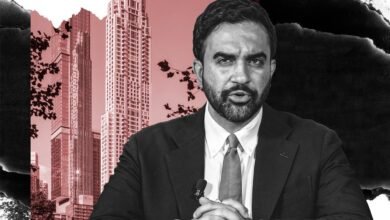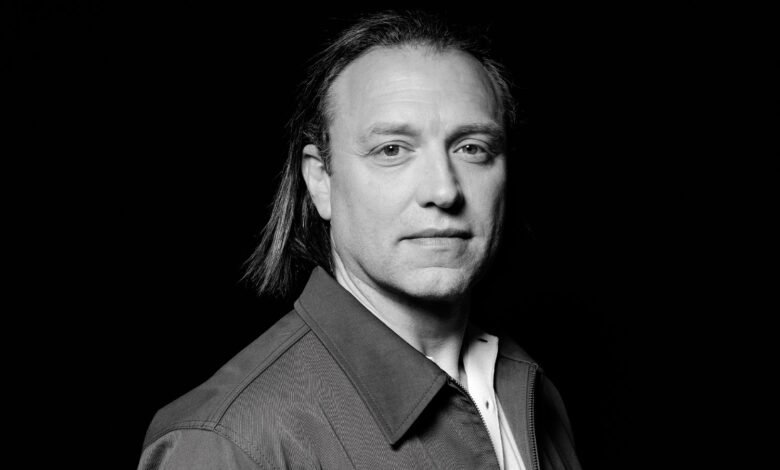
Jonathan Landau built an iconic Brooklyn tower at his last gig. Now he’s looking to do it on his own. Landau is planning a 47-story residential tower at 205 Montague Street, on the eastern edge of Brooklyn Heights and recently closed $213 million in financing.
The last job was at Fortis, which Landau co-founded with the father-son team of Louis and Joel Kestenbaum. In 2022, he left to launch a development firm, Landau Properties, with his daughter, Yaeli Lowinger, son, Gabe Landau, and son-in-law, D.C. Lowinger. Their first project, in Bay Harbor Islands, is an eight-story, nine-unit, sold-out boutique condo, Indian Creek Residences and Yacht Club.
They are also under way on One Kane, a 126,000-square-foot office tower, also in Bay Harbor Islands, which will be the first in Miami to offer private boat access.
The 51-year old Cleveland native’s thesis is to build “something a little bit better than his competitors,” as he puts it.” Every developer says something like this, but not all can point to Olympia Dumbo, the 33-story sail-shaped condo tower smashing Brooklyn sales records, including a recent penthouse sale for $16.3 million, or $3,297 per square foot, the most for a Brooklyn sponsor condo.
Indian Creek Residences also broke pricing records with a $12 million penthouse sale.
But beside the success of Olympia Dumbo was the failure of Fortis’ One Seaport, plagued by delays, litigation and a slight tilt that gave it the nickname “Leaning Tower of Seaport.” The unfinished development in Lower Manhattan is a visible example of the worst-case scenario as a New York City developer.
Now, Landau, a former tax lawyer, has filed plans for the Montague Street project. The street bridges Downtown Brooklyn with Brooklyn Heights, the neighborhood which Landau says is the crème de la crème of Brooklyn development opportunities.
Landau, who lives permanently in neither of the two markets where he builds, is religious and likes to talk about God. Having faith as a real estate developer is a necessity, he says, since anything can happen.
This interview has been condensed and edited for clarity.
Born: January 3, 1975
Hometown: Cleveland, Ohio
Lives: Baltimore, Maryland
Family: Married, 3 children
Where are you from?
I was born in Cleveland, Ohio.
Where do you live?
Pikesville, in Baltimore.
Where do you stay when you’re in New York City?
An apartment in Gramercy Park.
Why not move here?
I enjoy the quiet in Baltimore on the weekends.
What were you like as a child?
I was a wild child. Probably not wild in the context that you think, but yeah, I had a lot of energy.
Did you know you wanted to be a real estate developer?
I had no idea. I mean, I went to rabbinical college. So even though I had a lot of — I would say — the joy of life in me, I had a pretty serious religious upbringing.
“I was a partner in a company that developed it. I’m no longer a partner in that company.”
I read that you dropped out of yeshiva around 18 years old.
I went to three different yeshivas. It definitely wasn’t my sweet spot. But the level of intense, analytical and religious education and engagement in the Talmudic discussions definitely were an experience that I enjoyed.
How did that education help you as a developer?
I would say critical reasoning and analysis. And that when you have a dialogue or a debate with somebody, you have to listen to what they have to say.
What was your first business?
I tried a business [in] pre-internet times [to] sell fire extinguishers to people who lived around neighborhoods where there had been fires. State-of-the-art maps would give us all of the addresses for the immediate neighboring parties. [We’d] send them letters saying, “There was a serious fire in your neighborhood” and sell them fire extinguishers for 20 bucks. Our thought was, if we got even, like a 5 percent hit, we’d hit. The problem was that the information we were getting about the fires and locations were many times wrong. It didn’t really work out.
You went from working with a father-and-son team at Fortis to working with your daughter.
It’s been a gift.
What is it like?
We don’t talk about work unless we’re at work, because otherwise you erode the whole family relationship.
Some developers have gone into business with their children and have had a falling out. Was that a concern for you?
Absolutely. You take into account all these variables when making a decision. When you get married, you can consider the fact that you might get divorced. Yet, it doesn’t stop most people from getting married.
What gave you the confidence you could be a developer?
The first year I was a lawyer… I was invited to go to the National Association of Real Estate Investment Trust Conference in Arizona.
Arthur Andersen was still around in those days. I was invited to a dinner that had probably the top 10 partners in tax at Arthur Anderson and a bunch of real estate tax lawyers and real estate lawyers that were at the convention.
The head of my department got up and said, “I want to welcome the newest member of our group… Now let’s go around the table, and everybody give Jonathan a few of your thoughts or maybe some advice.”
The first guy got up, was a senior partner at Arthur Anderson, he said, “Look around the table here. Every one of us is successful. Do you know why? We are the best and most shameless self promoters in our industry.”
Understand, the people that were sitting around this table were geeks for all practical purposes, but there was an element of confidence and capability that was expressed to me at that dinner. I was young and I represented some pretty big players opposite very seasoned partners in New York law firms. And if you didn’t have confidence, you weren’t going to get off the first base.
How did you meet the Kestenbaums?
I was a tax lawyer for them. We were involved in a transaction that lasted a few years, and after that, we had a good working relationship.
Do you still talk to them?
I don’t really have a relationship with them.
Does One Seaport ever keep you up at night?
Somebody once told me, worrying is a good thing if you can do something about it, but if you can’t do anything about it, what’s the benefit of worrying about it? And you know it’s not my transaction. I was a partner in a company that developed it. I’m no longer a partner in that company.
Do you have any regrets?
I tend not to live in regret mode. I tend to be aware of mistakes that I’ve made and try not to repeat them.
Under Jewish law, if you commit a violation of the laws, you have to repent. And if you repent because of your love for God, then that violation turns into an attribute. So sometimes from your regrets, you can end up having an experience that you wouldn’t have otherwise experienced.
I think one of the mistakes I made, and I wouldn’t say I was responsible for this mistake, but I was definitely involved in it, was selecting a developer on the Seaport transaction that was a very large international contractor (Pizzarotti) that had limited experience here in New York City, probably cheaper than the next guy, or maybe on the low end of the cost scale.
And I think if you would have hired somebody like a Tishman or Turner or something like that, you probably would have had less exposure, more costs up front, less exposure down the road.
If you were the mayor of New York City, what would be the first thing you’d do?

I would actually try to find a way to make affordable housing work. This may be politically incorrect, but the whole concept of integrating affordable housing into luxury housing projects is ignoring reality. Back in the U.K., people didn’t live in the city of London. They lived on the outskirts of town. I think the concept of trying to force integration, where socially it doesn’t work, is No. 1.
Would you ever want to be a politician?
Absolutely not.
In 2016, you were a Trump supporter. Are you still?
Yes. Some people would be scared to say they’re Trump supporters, because they are worried about the political ramifications. We live in very difficult times. You’d be ignorant not to acknowledge that. And whoever the President is would have a terribly difficult time navigating it. And I think to a certain extent, he’s done a terrific job.
How has he helped the real estate industry?
As long as the larger economy is doing well, the real estate industry does well. Do I attribute that to a single person in office, exclusively? No. But I think he’s helped keep the economy strong.
As a real estate developer, I get a glimpse at the perceived result of political actions. So, for example, when Mamdani became mayor in New York City, everybody said there’d be a mass exodus into Miami. And as a developer in Miami, I did receive a few phone calls from very wealthy people saying do you have any units left? I’d like to move. None of them moved.
The Alexander brothers handled sales on your Miami project, Indian Creek Residences & Yacht Club. What was your relationship with them? What did you think about the verdict [in their sex-trafficking trial]?
Obviously shocked at all of the information that came out during the trial. We terminated our relationship with them once the information came out. I knew one of the brothers for a long time. I had no indication or idea that there was any of this stuff out there. Clearly, they were womanizers, but that’s it. I don’t really have any other comment.
What’s your dealmaking lunch spot?
In New York City, I would say, just because it’s close to our office, Zuma. In Miami, it’s more dinner than lunch.
Which dinner spot in Miami?
Four Seasons at The Surf Club.
What’s your biggest vice?
wouldn’t even call it a vice, but I would say skiing.
Where do you ski?
Primarily Deer Valley, Utah, and Switzerland.
Do you have a mentor?
I have a rabbi that I find to be an incredible human being and a very brilliant 102-year old grandfather, who I would call an astute and wise man.
Do you feel rich?
Absolutely. I feel blessed.
Around Covid, a lot of New York City developers built projects in South Florida. But you decided to come back and build. Why did you do that?
There was a huge amount of appreciation that had started in the marketplace, and I thought it still had some runaway left. So for me, that was an appropriate time. My son-in-law found the location, Indian Creek Residences & Yacht Club, and raised the money to do the project singlehandedly. So it was a no-brainer. And I do think the markets are extremely different.
New York is appealing to me. There is institutional money, and when you have institutional money, there’s less opportunity to be creative. If you can execute on that plane, at the same level as these institutions, but have individual creativity, you can bring something special to the marketplace.
Why did you pick Brooklyn Heights?
I have an opportunity to build something that I believe is the best building to ever go up in Brooklyn. Brooklyn Heights is the epitome of a development opportunity.
Anything else you want to talk about?
God. We didn’t talk about God. I was trying to think, somebody asked me this question: What makes you proud to be a Jew? As human beings, we have limits. And what religion offers you, and I think it’s a true enhancement, is it gives you the ability to say, okay, my limits are constrained, but I have faith in something that’s stronger and more powerful than my limits. Having an inspiration, having a connection to other people that feel the same way as you and have similar beliefs to you, empowers you and whether you’re Christian or whether you’re Jewish or whether you’re Muslim, that’s something that enhances your experience in life. In my case, God is a massive enhancement in my life and in my family’s life.