
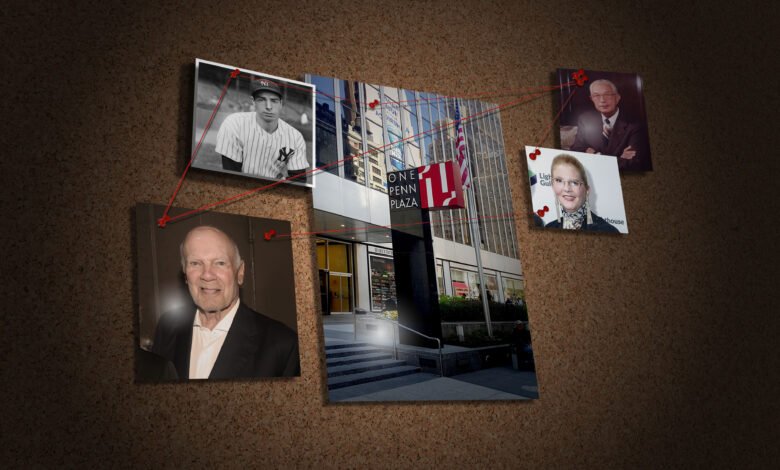
Keep the tune to Billy Joel’s ‘We Didn’t Start the Fire’ in mind (South Pacific, Walter Winchell, Joe DiMaggio) and swap in some of the biggest names in real estate: Harry Helmsley, Steve Roth, Darcy Stacom, Sarah Korein.
The multimillion-dollar rent dispute at One Penn Plaza between the Korein family and Roth’s Vornado Realty Trust is just as prescient and chaotic as Joel’s 1989 hit.
It features the Yankees Hall of Famer Joltin’ Joe as the face of Bowery Savings Bank, which in 1970 struck a fateful deal to sell the block across from Madison Square Garden to Helmsley. There’s a $1-a-year sublease that either did or didn’t get terminated a quarter century ago. And there’s a controversial decision from real estate’s most bemoaned Manhattan judge, whose retirement in the middle of the case could prove extremely consequential.
Along the way, the case has revealed industry secrets that are widely acknowledged but rarely spoken out loud: the allegiances New York’s top brokers have to powerful landlords and how the sausage gets made on contentious property appraisals.
Take a deep breath and follow along.
Where have you gone?
In the late 1960s and early 1970s, the Penn Plaza area was part of a big urban renewal project. The original Pennsylvania Station was demolished and replaced by Madison Square Garden, and the surrounding area was eyed for lots of new office buildings.
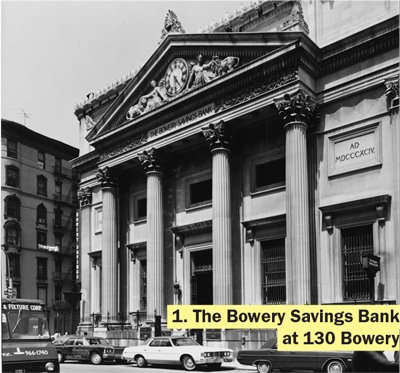
The block across from MSG — West 34th to West 33rd streets between Seventh and Eighth avenues — was owned by the Bowery Savings Bank1. Famous for its McKim, Mead & White-designed branch at 130 Bowery, the bank was founded in 1834 to encourage the European immigrants settling on the Lower East Side to build up savings.
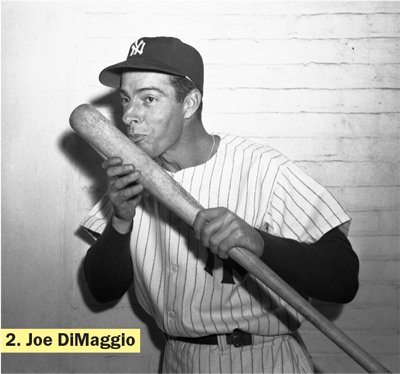
By the 1970s, it was the biggest bank in the U.S. by deposits, and its spokesman was Joe DiMaggio2.
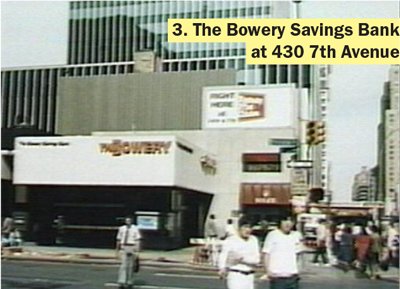
Bowery Savings operated bank branches on each end of the block, at 430 Seventh Avenue3 and 470 Eighth Avenue.
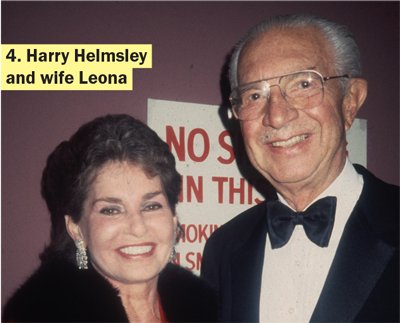
But it didn’t have much use for the mid-block parcel in between the branches. So in 1970, Bowery Savings sold that piece to Mid-City Associates — a partnership between Harry Helmsley4, Lawrence Wien, Metropolitan Life Insurance and the Equitable Life Assurance Society.
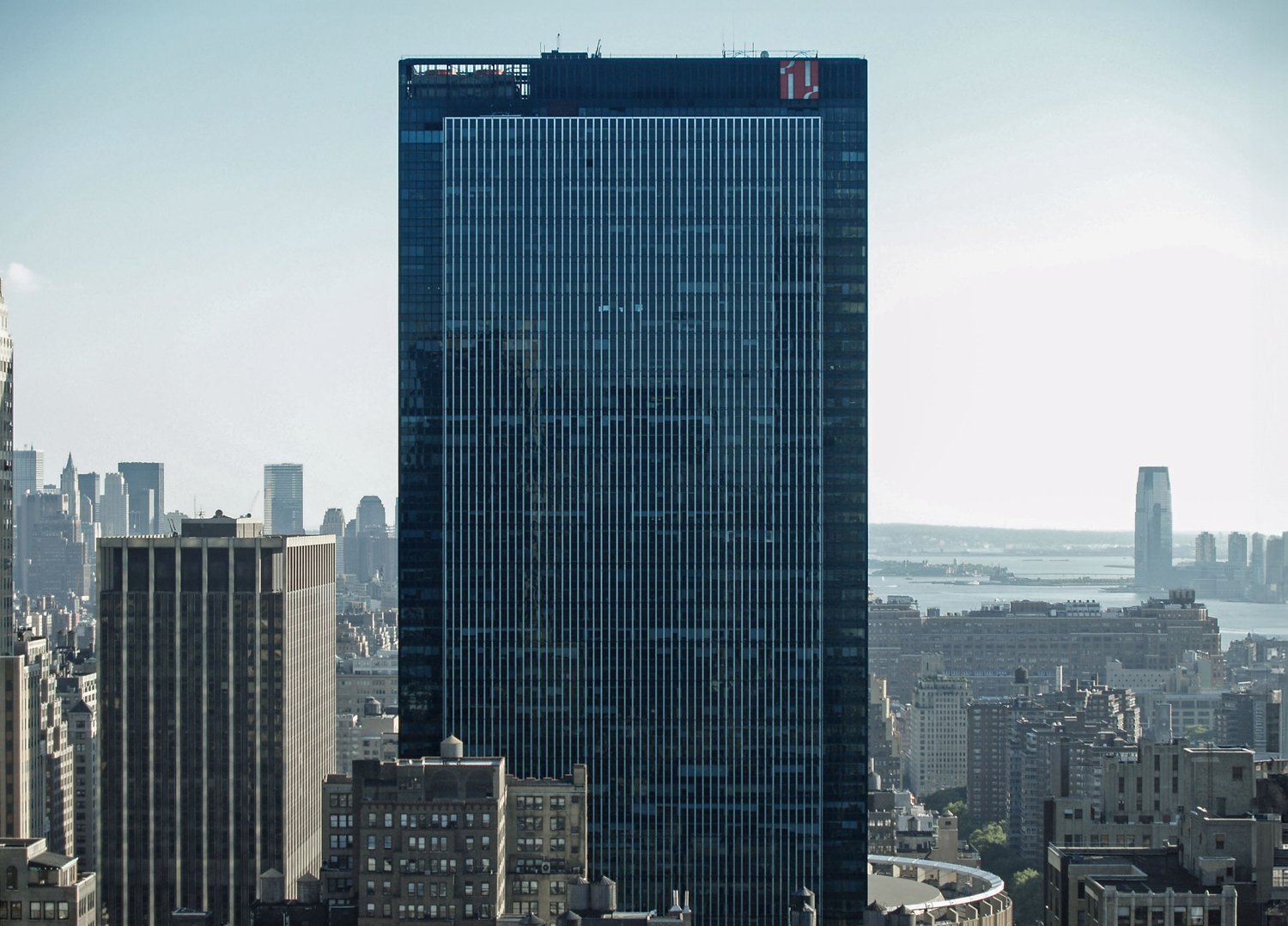
Mid-City developed the site into the International-style One Penn Plaza designed by the architecture firm Kahn & Jacobs, which assisted Ludwig Mies van der Rohe and Philip Johnson on the Seagram Building. The 2.5-million-square-foot One Penn was known for its signature “1” sign atop the 750-foot tower.
Bowery Savings wanted to keep control of its bank branches and retain some of the block’s development rights. So it structured the deal as a 125-year ground lease to Mid-City, which then subleased the bank branch parcels back to Bowery for $1 a year.
Per the terms of the lease, the rent was scheduled to reset on June 17, 2023, at which time it would be set at 6 percent of the fair market value of the land. That value was to be determined by a panel of three appraisers, which the lease — quite consequentially — specified needed to be “impartial.”
The sublease, meanwhile, was set to expire on July 9, 2020, three years before the rent reset, and had an option to renew.
Bowery and Mid-City agreed that if the sublease were in place when the rent reset arrived, the appraisers would have to take it into account when valuing the property. The reasoning is similar to a rent-stabilized building. If the below-market sublease is in place, the property is worth less than it would be unencumbered, meaning the new 2023 rent would be less than if the sublease was left to expire.

I love the ’80s
Helmsley finished One Penn in 1972 at a cost of about $100 million. And despite early troubles, leasing the tower during the 1973-to-1975 recession, the building was nearly fully occupied by 1978.
The next two decades saw a complete reshuffling of the major players on the block:
1984: Bowery Savings sold the ground under the entire block to Sarah Korein, a Hebrew teacher turned notoriously tough investor with “bare-knuckle tactics cloaked by grandmotherly charm,” according to her obituary in the New York Times.
Korein died in 1998, and one of her heirs, Leo Korein, now runs the family empire, which includes the ground under Lever House and 430 Park Avenue.
1995: The Bowery Savings Bank struggled through the 1980s and in 1995 was sold to Greenpoint Savings Bank, which took over its branches — including the sublease on the One Penn block.
1998: Following Harry Helmsley’s death in January 1997, his company Helmsley-Spear (led by Leona Helmsley and Peter Malkin) sold One Penn Plaza to Vornado for $410 million.
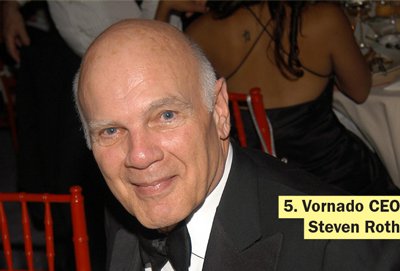
It was the centerpiece of a push by Vornado5 (which at the time was headquartered in New Jersey) into Manhattan. Roth’s company also bought 4 million square feet of properties in the area, including 2 Penn Plaza and 11 Penn Plaza, for $650 million from developer Bernard Mendik.
New leases on life
Vornado wanted to get control of the retail on either end of the block, so in 1999 it bought Greenpoint Savings Bank’s sublease for $36 million.
Roth’s company leased the spaces to tenants including Duane Reade, Bank of America and Swarovski, deals that generated millions of dollars in revenue.
For reasons that aren’t entirely clear, Vornado and Greenpoint Savings recorded the transaction in city property records as a termination of the ground lease — a decision that came under scrutiny 23 years later.
The deadline approaches
With six months to go before the rent on the ground lease was scheduled to reset, the Koreins and Vornado in late 2022 had to pick the appraisers.
This turned out to be easier said than done.
The Koreins said they had trouble finding a broker who would work opposite Vornado.
“For Manhattan real estate brokers, Vornado is a highly relevant and sought-after client,” wrote the Koreins’ attorney, Brett Dockwell of Haynes & Boone6, in a lawsuit against Vornado over the rent reset.
“Because landlords like Vornado pay the commissions for both the landlord’s and the tenant’s brokers, remaining in Vornado’s good graces can be vital to a broker’s livelihood,” added Dockwell, who has a track record of dealing with ground lease disputes like the Crowne Plaza Hotel in Times Square and the Gramercy Park Hotel.
The family said they tried to hire several brokers — including Stacom7, Bob Knakal and Doug Harmon — and all turned them down.
They eventually hired David Pearson of Pearson Realty Services; Vornado appointed Stacom, then at CBRE.
Mark-it: correction
On the day before Vornado notified the Koreins that it selected its appraiser, the REIT filed a memo in city property records that it said “corrected” the lease termination with Greenpoint Savings 23 years earlier.
Vornado and Capital One (which acquired Greenpoint’s successor in 2007) said the 1999 agreement wasn’t actually a termination of the lease but instead an assignment of the lease to Vornado. If that were the case, it would mean that the sublease is in place and Vornado would pay less rent under the reset.
This, of course, is a major point of disagreement.
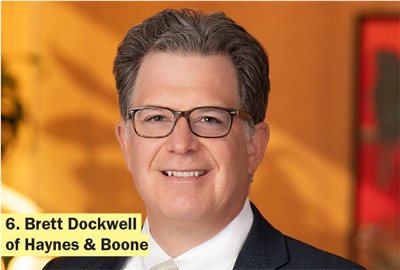
“We agree that the question in this case — the central question — is what did the parties intend in 1999, and the parties being Greenpoint and the defendant, when they executed the surrender agreement,” Dockwell said at a hearing in October 2024.
Determining the intent from 1999 is difficult, Dockwell acknowledged, because the people at Greenpoint who signed it are not part of the case.
“None of the people who were involved in the execution of the 1999 surrender agreement, to my knowledge, are involved in the case at this point,” he said. “Certainly none of them has put in an affidavit or anything in this case.”
Vornado’s attorney, Janice MacAvoy8 at Fried Frank, said Vornado made a mistake in 1999 when it characterized the deal as a termination, and that the law allows both parties to go back and correct the record.
“Which gets to the legal issue that is at the core of this case,” she said.
A cockamamie ruse?
The Koreins filed a lawsuit in Manhattan court in March 2023 arguing that it’s not up to the appraisers to determine whether the sublease is valid, and the appraisal process can’t move forward until the matter is settled.
They asked the judge overseeing the case, New York Supreme Court Judge Lucy Billings, to strike Vornado’s “corrected” lease from the city’s property records and declare that the sublease no longer exists, and therefore shouldn’t be considered by the appraisers.
“This a case where attorneys sitting around the table come up with cockamamie ideas on a way to advantage their client,” Dockwell said. “And this is a ruse that is intended by the defendant to skirt its obligations under the ground lease to pay rent for the premises which it occupies and which it generates substantial revenue from.”

Billings ruled in Vornado’s favor the following August, saying the REIT and Capital One were “free to rewrite the agreement to cancel the termination, revive the sublease, and assign rather than surrender it to [Tenant].”
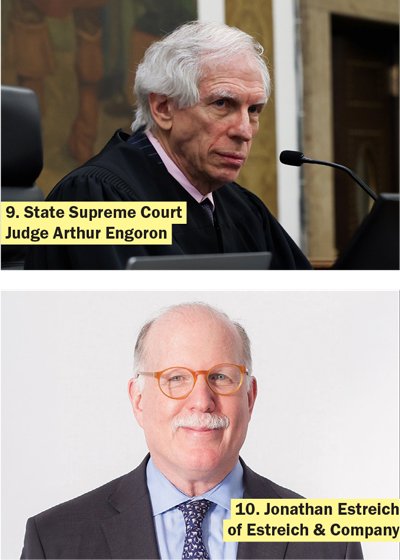
The Koreins appealed the decision. But not long after Billings retired and the case was transferred to State Supreme Court Judge Arthur Engoron9, a judge with a history of controversial decisions in real estate cases.
Engoron oversaw the civil fraud trial that the New York Attorney General Letita James brought against Donald Trump and the Trump Organization in 2023, arguing that he inflated asset values to secure favorable loans and insurance terms.
Engoron found Trump liable and issued a penalty of $450 million. An appeals court later threw that penalty out, saying it was excessive and unconstitutional.
But Engoron’s reputation among the real estate community is tied most firmly to a 2019 decision where he blocked the development of a handful of apartment towers in Two Bridges, despite the fact that the towers were as-of-right according to the area’s zoning.
“These are huge towers. I’ve lived in the city my whole life. You can’t just do this because the zoning allows it,” he said in words that real estate rues to this day. “I just can’t believe this is the case.”
An appeals court later overturned Engoron’s ruling, which many in real estate saw as validation that he had overstepped his authority.
Level setting

While the Koreins were appealing the sublease issue, the appraisal got underway.
Their appraiser, Pearson, initially proposed a value of $1.9 billion.
Stacom came in at the complete other end of the spectrum. She said the property had “no true economic value” and would have been unmarketable because of the depressed state of the market at the time.
In 2023 there hadn’t been a single real estate deal in the country north of $100 million, Vornado attorney MacAvoy noted.
“Now, we also need to level set and recall what the valuation date here was,” she said during a court hearing. “It was June of 2023, which was smack in the middle of the worst commercial office market in decades. There were spiking interest rates. SOFR [the Secured Overnight Financing Rate], as Ms. Stacom states in her report and affirmation, … had spiked 10,000 percent, your Honor. Interest rates were out of control. There was uncontrolled inflation, frozen capital markets, continued work-from-home fears, so many other issues that were detailed in Ms. Stacom’s report and in her affirmation.”
Stacom eventually acknowledged that someone would have bought the land — even in such a depressed market — and opined that it had a fair market value of $180 million.
With the two sides so far apart, they had to find a third appraiser. The Koreins and Vornado agreed on mortgage broker Jonathan Estreich10 of Estreich & Company, who got to work as chairman of the appraisal committee.
The appraisal process took 18 months, during which time the panel met 26 times and heard testimony from two dozen experts.
But things started to get contentious. The Koreins said that Stacom started threatening the other two appraisers.
“Stacom allegedly said that if things did not go her way, One Penn (or its owner, Vornado Realty Trust or some Vornado entity) would sue Estreich and Pearson, and that Stacom would ‘ruin’ Pearson in the real estate business,” Engoron wrote in court papers. “Estreich admonished Stacom, who apologized the next day.”
MacAvoy acknowledged that Stacom lost her temper and raised her voice. But she said the broker was making a general statement about the panel risking litigation if it didn’t follow the appraisal procedures, and wasn’t making a threat.
The Koreins, however, said Stacom’s words had an impact, and that afterward Estreich went off and worked on his own. The panel was scheduled to hold final deliberations over a period of five or six days starting on March 24, 2025, but the Koreins said that never happened.
“The litigation threat by the defendant’s appraiser shut down those deliberations,” Dockwell said during a court hearing. “What we’re saying is that [Estreich] was intimidated enough by this litigation threat that he shut down deliberations.”
“Any person in New York real estate would, you know, take a litigation threat from a party like Vornado seriously,” the attorney added. “They’re not to be trifled with. You know, they’re a forceful adversary to have.”
Estreich eventually came back to the others with two valuations, depending on the litigation over the sublease. He said that if the sublease were in place, the property would be valued at $250 million. If not, it would be valued at $337 million.
Vornado was paying the Koreins $2.5 million a year in rent. Estreich’s range would increase the annual rent payments to between $15 million and $20 million.
The Koreins’ appraiser countered with a valuation ranging from $320 million encumbered by the sublease to $400 million unencumbered. But Estriech declined to adjust his opinion, and Stacom, notwithstanding her earlier professional opinion that the land was worth essentially $0, agreed with his figures.
The appraisers delivered their 2-to-1 report on April 22.
They had long agreed that the decision would be “unreasoned” — meaning that they wouldn’t give an explanation for how they arrived at their figures.
Engoron said that trial judges are used to dealing with major disagreements among parties, but this one took the cake.
“This court has rarely, if ever, seen such Rashomon-like differences in perspective,” he wrote. “Was the appraisal process perfunctory, secret and suspicious? Or was it substantive, open, impeccable?”
The juicy part
The Koreins moved to vacate the appraisal decision, arguing that Stacom wasn’t impartial (as the 1970 ground lease between Bowery Savings and Mid-City dictated) and that Estreich refused to follow procedure and deliberate with the two other appraisers after Stacom’s threat.
Engoron said he found the appraisal process to be troubling and suspect.
“In particular, [Estreich] seems (probably due to fear of being sued) to have withdrawn from any meaningful contact with the parties, to have delegated much of his responsibilities to an underling, and to have issued an award that is not just ‘unreasoned’ but inscrutable,” he wrote in an October 31, 2025 decision.
“Maybe appraisals, like laws, are like sausages, best not seen being made; but parties and courts should feel reasonably confident that a process meant to be fair was actually a process, not just a shot in the dark, or worse.”
Despite this, Engoron’s decision at first seemed like it would side with Vornado. He said the court was constrained in its ability to accept the Koreins’ objections over Estreich’s process, and that the appraisal wasn’t so low that the court could reject it.
But then the tone of his decision shifted: “Now here comes the juicy part,” he wrote.
Engoron noted that as the appraisers’ deliberations were getting ready to begin, Stacom left CBRE and launched her own advisory firm. A press release announcing the new company included a quote from Roth, saying Stacom “will be getting many important and complex assignments from us.”
This, Engoron decided, created an “egregious appearance of impropriety.”
“This Court finds that Stacom’s possible partiality to Vornado, and thus to One Penn, was so toxic to fairness that only blatant acquiescence, not present here, would qualify as wavier,” he wrote. “The appraisal process was flawed, and this Court will not let the appraisal stand.”
Engoron vacated the appraisal.
Let’s be frank
As luck would have it, Engoron retired at the end of 2025 and the case was reassigned to New York State Supreme Court Judge Lyle Frank.
In January, Vornado appealed Engoron’s order, saying he ignored case law and exceeded the Civil Practice Laws and Rules (CPLR) for vacating.
In her legal brief, MacAvoy said the judge based his ruling on a decision from 100 years before the CPLR was enacted. And she noted that the press release he cited went out in February 2025 — a year after the appraisers issued their final report.
“A single, generic laudatory statement made by the CEO of One Penn’s parent company about potential future business with the appraiser’s new firm does not come close to showing the required partiality,” MacAvoy wrote.
The appeal is on the court’s docket for the September term.
In the meantime, the dispute has captured the attention of the real estate community. It’s pulled the curtain back on the appraisals process and name-dropped plenty of big time brokers who allegedly got caught up in industry politics.
What might be even more remarkable is what’s still hidden from the public eye. Much of the case is filed under seal.
“That’s because Vornado is the largest landowner in the Penn District, and what it argued in this proceeding is not something it wants in the public, because it said it was worth zero, and the biggest broker in Manhattan said it was worth zero,” Dockwell said during a hearing.
It’s a head-scratching argument to make, considering that the Koreins also filed a motion to seal documents.
Perhaps the only reaction is the Piano Man’s: “We didn’t light it, but we tried to fight it,” he sang.