
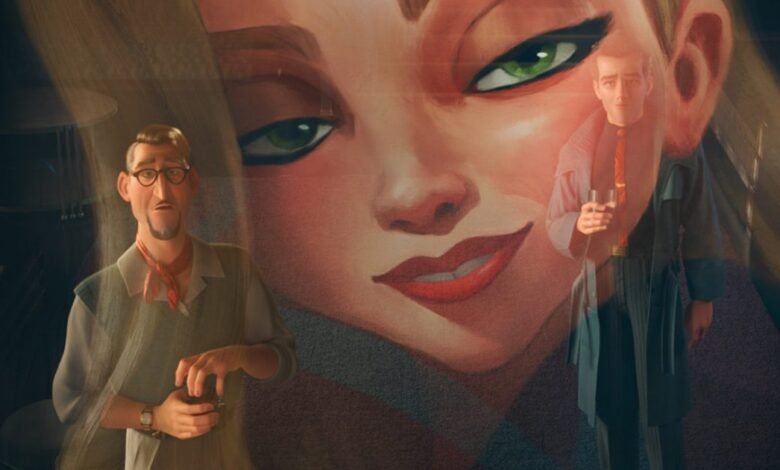
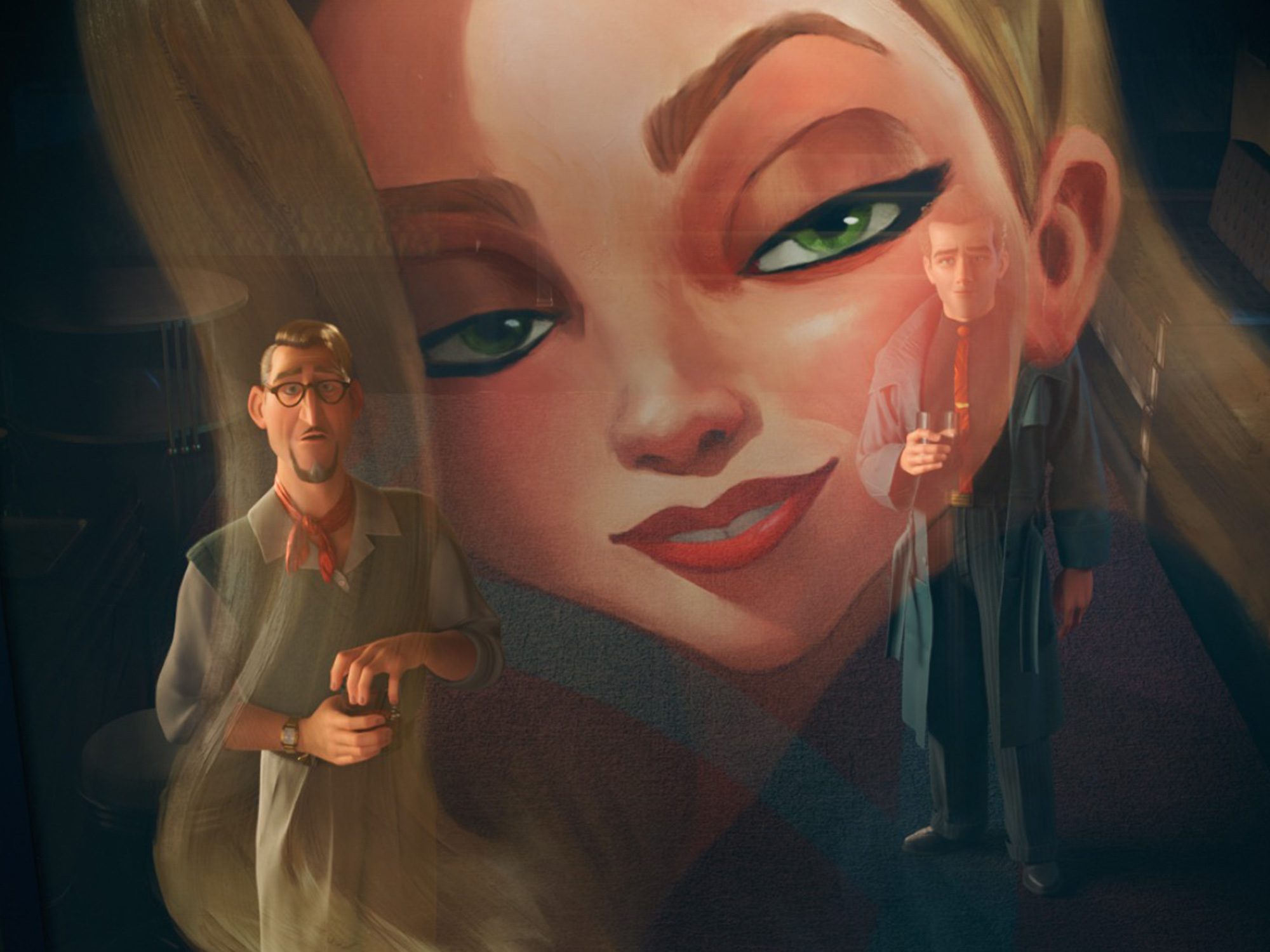
This is a fantastic film, in all senses of the word. Brad Bird, part of the original Pixar brain trust, who contributed to arguably one of the late golden ages of American feature animation, is back with a work – a labour of love, no less – that would happily rub its chrome-plated shoulders among the eccentric likes of The Incredibles, Wall‑E, Up! and Ratatouille. What is refreshing about the hardboiled, retrofuturist noir adventure, Ray Gunn, is that it is the film that Bird wants it to be rather than the film he needs it to be. There’s no pandering to audience demographics, there’s no softening of some of the harder edges, and there are no postmodern pop cultural quips that would only serve to age the film like so much soda pop left to sit in the sun.
The film filches its tone and its narrative cues from Raymond Chandler and drops them all from the top of an art deco steampunk skyscraper in a city called Metropia where ’50s-styled finned automobiles charge through the sky and shrill holographic advertisements with mid-century jingles are visible in every home. It’s a world where humans and aliens unhappily mix, and the only common language they share is that of the marketplace. The shambling, charming Ray Gunn (voiced with lairy perfection by Sam Rockwell) is the classic Private Dick who’s behind on his rent payments, his suit doesn’t fit and who quit the police force for entirely ethical reasons. Tom Waits voices his shy but wise alien assistant Eyera, helping Ray to remember what he’s shooting for and access places where humans aren’t welcome (and vice-versa).
Get more Little White Lies
In many ways segregation is Metropia’s dirty little secret, but its deeper complications come to the fore when Ray is hired by the dodgy husband of ultra-famous celebrity pop singer Venus Nova (Scarlett Johansson) who wants some photographic evidence to confirm that his wife has been cheating on him, and possibly engaged in other more nefarious activities. Of course, this standard, quickie job, taken on to keep the wolf from the door, sees Ray and Eyera plunged into scandal, conspiracy and some dark bits of business that wouldn’t have been out of place in Roman Polanski’s Chinatown.
The first thing to say is that Bird and Matthew Robbins’ screenplay is a thing of pristine beauty, retooling the pop and crackle of classic-era noir patter but with a sassy modern edge. It’s exhilarating and, indeed, quite discombobulating (in a good way!) to be watching a feature animation where two characters engage in an extended conversation that isn’t merely a container for reams of necessary exposition or quickfire yuks. The relationships between characters build and evolve and twist and back-peddle and – eventually, gorgeously – blossom. While this might all read like nuts and bolts stuff for a piece of frisky genre fare, it’s just so rare to see it in an animated feature, and one that doesn’t desperately pander for affection at every jack-knifing turn.
While the story is calibrated in an knowingly old fashioned mode, this thing positively heaves with breathless set pieces and dazzling character choreography, whizzing past awe-striking edifices and tossing neat ideas and futuro concepts at the screen like it’s no big thing. The film also doesn’t pull its punches when it comes to critiquing corporate malfeasance, suggesting that there will never be a time that isn’t rife with scoundrels, gangsters and moustache-twirling bad actors, even – whisper it – in the arts industry. At time of writing, this seems like the animation to beat come awards season, but the real question is: what would it take to get Rockwell and Johannson on the acting ballots too?