 Veteran journalist and newspaper editor Anthony Hall of the Lake George Mirror alerted us to this story. Subscribe (or just make a gift) to the Mirror to support the important work of local journalists.
In the murky depths of Lake Champlain, the skeletal remains of the Continental Navy schooner Royal Savage rested for over 150 years, a silent witness to the birth of the American Navy.
However, after recovery in 1934 through turbulent years of improper storage, possibly being sold off to the highest bidder, and the government’s rescue of artifacts, countless hours of preservation, 3D-scans of original timbers and 1:12 scale models, visitors to the National Museum of the U.S. Navy in Washington, DC, can finally see history re-imagined.
A Flagship Forged in Conflict
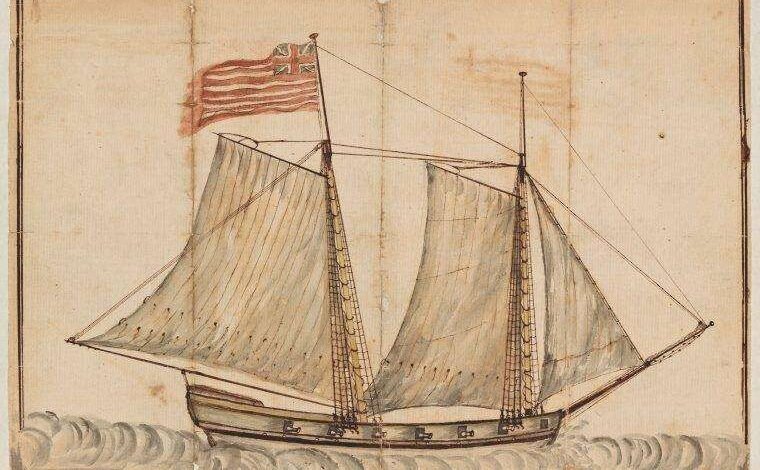
Royal Savage was originally a two-masted schooner built by the British in 1775 at Fort St. Jean on the Richelieu River in Quebec to dominate and maintain control over Lake Champlain.
Described as an elegantly built vessel of approximately 70 tons, she was roughly 50 feet long with a beam of 15 feet and armed with a complement of eight 4-pound and four 6-pound cannons.
In the fall of 1775, during invasion of Canada by Continental forces under Richard Montgomery, the schooner was sunk at its dock during the siege of St. Johns.
 When the fort fell to the rebels, American troops raised and repaired the vessel, commissioning it into service as the flagship of the American Lake Champlain squadron.
Though briefly considered to be named Yankee, the name Royal Savage endured – a title the rebels found fittingly ironic given the British tendency to incite tribal forces against them.
By July 1776, under the command of Benedict Arnold, Royal Savage became the focal point of a desperate shipbuilding program at Skenesborough (now Whitehall, NY) and Ticonderoga. The goal was simple but daunting: create a fleet capable of delaying a massive British force until the following spring.
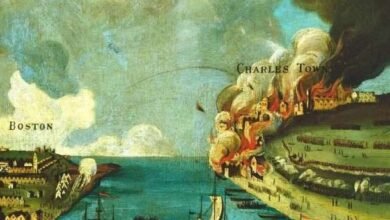
On Oct. 11, 1776, Royal Savage met its fate in the narrow channel between Valcour Island and the shore of New York near Plattsburgh. Arnold, positioning his fleet in a crescent-shape between the mainland and southern cove of Valcour Island, hoped to force the British to beat against the wind to escape.
As the Battle of Valcour Island commenced, Arnold would transfer his flag onto the ship Congress, while Royal Savage, attempting to maneuver back into the American line with Congress, Trumbull, and Washington, failed to make a crucial turn.
Royal Savage would bear the brunt of the British gunboat’s fire, as well as at least three shots from the British ship Inflexible, tearing up the rigging, ultimately causing the schooner to run aground on the southern point of Valcour Island.
The crew abandoned ship, and British sailors from the Loyal Convert would board the disabled schooner and turn Royal Savage’s guns against Arnold’s troops and the American line. To prevent the rebels from retaking the vessel, the British set it on fire.
 The Continental gondola Philadelphia sunk an hour after the close of action, while Royal Savage would burn throughout the night, allowing Arnold and his remaining fleet to slip away in the darkness.
Though the American squadron was eventually shattered, the three-day struggle delayed the British advance by a crucial year. The delay gave the Continental Army time to organize the defense that would lead to the victory at Saratoga in 1777.
From Salvage to Reparation
For 158 years, Royal Savage laid in 20 feet of water, subjected to the whims of nature and the curiosity of locals. From 1830 until the mid-1860s, local newspapers would describe how relic hunters used stump pullers and grappling irons to haul up sections of timber, which were then fashioned into rulers, canes, and other items.
By the 1880s, word spread beyond the shores of Lake Champlain as non-locals from Boston would descend on Royal Savage, using diving equipment to recover cannon balls, bar shot, and silver.
By 1901, newspapers would report that the use of a derrick would assist in the further extraction of gun carriages, ten-pound cannon balls, various types of shot, muskets, everyday items used by sailors and even human bones.
 Although there were many attempts to raise Royal Savage since the Battle of Valcour Island, in 1934, Lorenzo F. Haggland, a retired Army lieutenant and retired professional salvor, decided to salvage what remained of the ship from Lake Champlain and make it available to the public.
Using innovative methods – including empty tar drums lashed to the hull and pumped full of air, he floated the remains of Royal Savage and hauled them ashore.
Over 2,250 artifacts, including ordnance, including various bar and grape shot, and personal items like silver spoons and military uniform buttons were recovered.
Hagglund’s attempt to document recovered items included, assigning brass number tags to the approximate 76 individual structural timbers and creating a “wreck plan,” drawing of the timbers, along with sketches and photographs of the intact hull assembly prior to its disassembly, which would prove invaluable to researchers nearly a century later.
Hagglund’s efforts culminated in a 1950 master thesis entitled “Concerning the Royal Savage,” which preserved the vessel’s story while he struggled to find a permanent museum home for it, which never materialized.
After his death in 1961, the timbers passed to his son Hudson who would finally sell the remains to the City of Harrisburg, Pennsylvania in 1995.
In Harrisburg, Royal Savage faced its darkest chapter. Purchased by then-Mayor Stephen Reed as part of a massive, unfunded artifact collection, the timbers were stored in a water treatment plant warehouse.
For twenty years, the charred remains were so mismanaged that they no longer resembled a historic vessel but rather a pile of firewood.
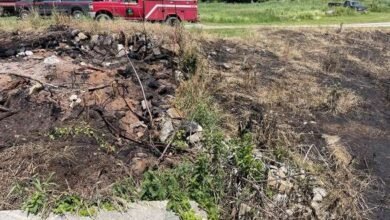
 In 2013, after a series of legal and financial crises, and in an attempt to recoup millions of unfunded dollars spent on historical artifacts by Reed, the City of Harrisburg posted a number of Royal Savage artifacts and timbers for sale on an auction website.
Alerted to this sale, the Naval History and Heritage Command (NHHC) intervened to reclaim the property as sunken military craft under the jurisdiction of the Department of Navy.
In 2015, the tide finally changed for Royal Savage. In the closing days of June, NHHC underwater archaeologists and archaeological conservators inspected some 60-plus timbers and over 2,000 artifacts.
The items were packaged to handle travel from Harrisburg to the Washington Navy Yard for the start of a multi-year preservation effort.
The Science of Preservation
When an artifact is retrieved from a sunken military craft or submerged site, it must undergo conservation treatment to mitigate any potential damage from the radical environmental shift it experiences. Exposure to light, oxygen, and varying temperatures can trigger rapid degradation; for example, waterlogged wood may shrink, crumble and warp, while metals can oxidize and corrode.
To ensure the long-term stability of Royal Savage’s artifacts, staff at NHHC’s Conservation, Research, Archaeology Laboratory, a part of the Underwater Archaeology Branch, UAB, on the Washington Navy Yard, are responsible for the documentation, research, treatment, and curation of artifacts recovered from sunken U.S. Navy military craft.
When conservators receive items, their process begins with an initial artifact assessment. Artifacts are fully photographed and documented to note the object’s weight, measurements, and overall condition, followed by a scientific analysis that may provide clues regarding the artifact’s composition, archaeological features, and in some cases, whether there is any residual material from previous cleaning campaigns.
Conservators also use a variety of non-destructive techniques like microscopy, X-ray, and Fourier Transform Infrared Spectroscopy to help conservation treatments. Some of this analysis was conducted in partnership with the U.S. Naval Academy’s Chemistry Department and confirmed that hundreds of iron artifacts had been coated in shellac.
Complementing this, longwave ultraviolet radiation was used to assess the age of these coatings; fresh shellac typically fluoresces green, but the Royal Savage samples fluoresce orange, indicating aging and degradation.
This scientific insight allowed conservators to develop a detailed conservation treatment plan and work began to preserve the artifact for future study and display.
Each piece will undergo a different conservation treatment to ensure it remains structurally sound. Ideally, artifacts are recovered wet and kept wet during the initial phases of conservation treatment. Artifacts submerged for longer periods in marine environments must first undergo desalination.
Conservators use a combination of mechanical and chemical cleaning to remove any material that is obscuring or causing harm to the artifact, like concretion – shells, sand, and corrosion products fused together, forming a hard, rock-like shell around the artifact. However, for organic materials such as wood, the cellulose walls (the “skeleton” of the wood) rots away and is replaced with water.
Once the wood is removed from a watery location, the artifact will shrink, warp, and possibly crack until it’s unrecognizable. Once the wet phase of treatment is complete, the artifacts undergo a controlled drying phase along with certain protective coatings so they can be stored and displayed.
For Royal Savage’s timbers and objects, which have been in an oxygenated environment for 80-plus years and despite an earlier attempt to preserve them in the 1930s, when these items arrived at NHHC, they needed quite a bit of care.
Conservators used an inert fumigation system to ensure that the timbers did not bring any active infestations or mold into the collection, since while they were in Harrisonburg, Royal Savage‘s timbers were stored in the city’s water treatment plant warehouse. Conservators also had to do extensive research to identify many of the coatings and materials that were applied in the earlier preservations.
By taking the time to do these steps methodically, developing methods to safely remove those that were falling apart and causing damage to the artifacts, while applying new treatments, more than 145 artifacts have been fully conserved.
Precision in 3D: From Scans to Models
Beyond chemical stabilization, the UAB staff began formulating a plan focused on the “virtual reconstruction” of the ship based upon the timbers saved. Because the surviving timbers are heavy and extremely fragile, physical experimentation with reassembling is risky.
Instead, the science of recording these timbers was a multi-stage effort, primarily utilizing photogrammetry and laser scanning. The photogrammetry process involves generating three-dimensional models from a vast collection of high-resolution photographs.
Using a Nikon D90 camera and studio lighting in building 47 on the Washington Navy Yard, researchers photographed each of the timbers from multiple angles – circling them in three tiers to ensure complete overlap and coverage.
These images were then processed using photo software that aligned the image by identifying common pixels, creating a “point cloud” that mapped the geometry of the timber in space.
This process allowed for the capturing of aesthetic details of the wood, including subtle textures and the true coloration that simple drawings could not convey.
UAB, with assistance from Indiana University of Pennsylvania Archaeologist in late 2015 through 2016, complemented this prior work with the use of Leica laser scanning for superior dimensional accuracy of the timbers.
Later in 2017, NHHC contracted a specialized firm to individually scan each of the structural timbers using a handheld 3D scanner. Unlike photogrammetry, which requires manual scaling, the handheld unit inherently ‘knew’ its position in relation to the timbers, providing dimensionally reliable data of each individual timber.
Also in 2017, with assistance from the Lake Champlain Maritime Museum, each timber was measured and documented for the creation of a timber catalog for archaeological interpretation.
From 2018 through 2020, UAB continued work on Royal Savage, producing a book chapter on the history of Royal Savage and the various timber scanning methods while using prior scans to model the timbers using Non-Uniform Rational B-Splines software, a 3D geometry system used in CAD to reassemble the timbers in their original hull configuration, and developed virtual line drawings of the hull, based on the archaeological evidence to be used in the creation of ship models.
In 2021, under a cooperative research agreement, NHHC partnered with Texas A&M University to develop an exhibit to display the reassembled remains of the Revolutionary War vessel Royal Savage in the National Museum of the U.S. Navy, as well as build two 1:12 scale models.
Glenn Grieco, a seasoned ship modeler from the Texas A&M Nautical Archaeology Department, dedicated over two years to meticulously recreating Royal Savage. Utilizing a blend of traditional research and modern technology, such as the multiple 3D scan and NHHC’s hypothetical reconstruction of the ship’s original timbers, allowed him to establish the vessel’s rough outline.
Grieco described the process of building these models to NHHC staff, noting that his initial model did not fit his original outlined design, that in fact, he needed to do a deeper dive into historical documentation, contemporary iconography, and comparisons with similar 18th-century ships to accurately reconstruct missing sections of the hull.
 This resulted in the initial timber model as an experiment to identify design flaws (referred to as the “as-is” model), before finalizing the “as-built” version.
For Grieco, the work was less about the overall engineering and more about the craft of a shipwright, trying to replicate the model exact methods used by the original builders.
The resulting 1:12 scale models are built at a scale where one inch on the model equals one foot on the original vessel. The model features fully operational structures and rigging, including a working rudder and cast brass cannons that technically could be fired if scaled-down gunpowder was used.
Grieco emphasized that this level of detail is a ‘luxury’ afforded by the model’s large size, allowing him to follow the same procedures the original shipwrights would have employed centuries ago.
You can listen to Glenn Grieco tell his story about the delivery and building of Royal Savage here.
Preserving the 250th Anniversary
As the 250th anniversary of America’s founding nears, Royal Savage is recalled as a ship built by enemies, captured by patriots, and sacrificed for the birth of a nation.
Another ship that served at the Battle of Valcour Island, the gunboat Philadelphia, was also found and raised by Lorenzo Haggland in 1935.
Philadelphia, considered as the oldest surviving American fighting vessel, was on display in the Lake Champlain region from 1935 to 1964, before becoming a Smithsonian Museum of American History exhibit in 1964.
Read more about the Battle of Valcour Island.
Line of battle at the opening of the Battle of Valcour Island; Royal Savage being destroyed by the Royal Navy by an unknown artist, ca. 1925; Remains of the Royal Savage’s hull, being raised from Valcour Bay in 1934; Timbers from the Royal Savage at the time of its online auction; and the final “as built” model of the Royal Savage.
Source link