Kouzuki is not the only one. Count Fujiwara is in fact a Korean conman, and the ease with which he passes as Japanese nobility unsettles the concept of a coherent ethnic identity. The lack of perceivable difference between the Japanese colonisers and the colonised Koreans engenders an uneasy ambiguity where it’s hard to tell friend from foe. By successfully mimicking the colonisers, it becomes evident that their superiority isn’t as inherent as they’d want you to believe. That the only real Japanese character, Hideko, is played by South Korean actress Kim Min-hee, adds an extra-diegetic layer of mockery.
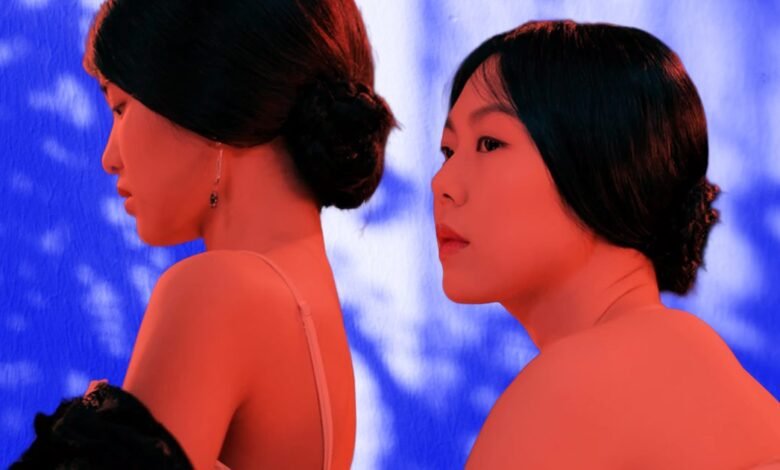
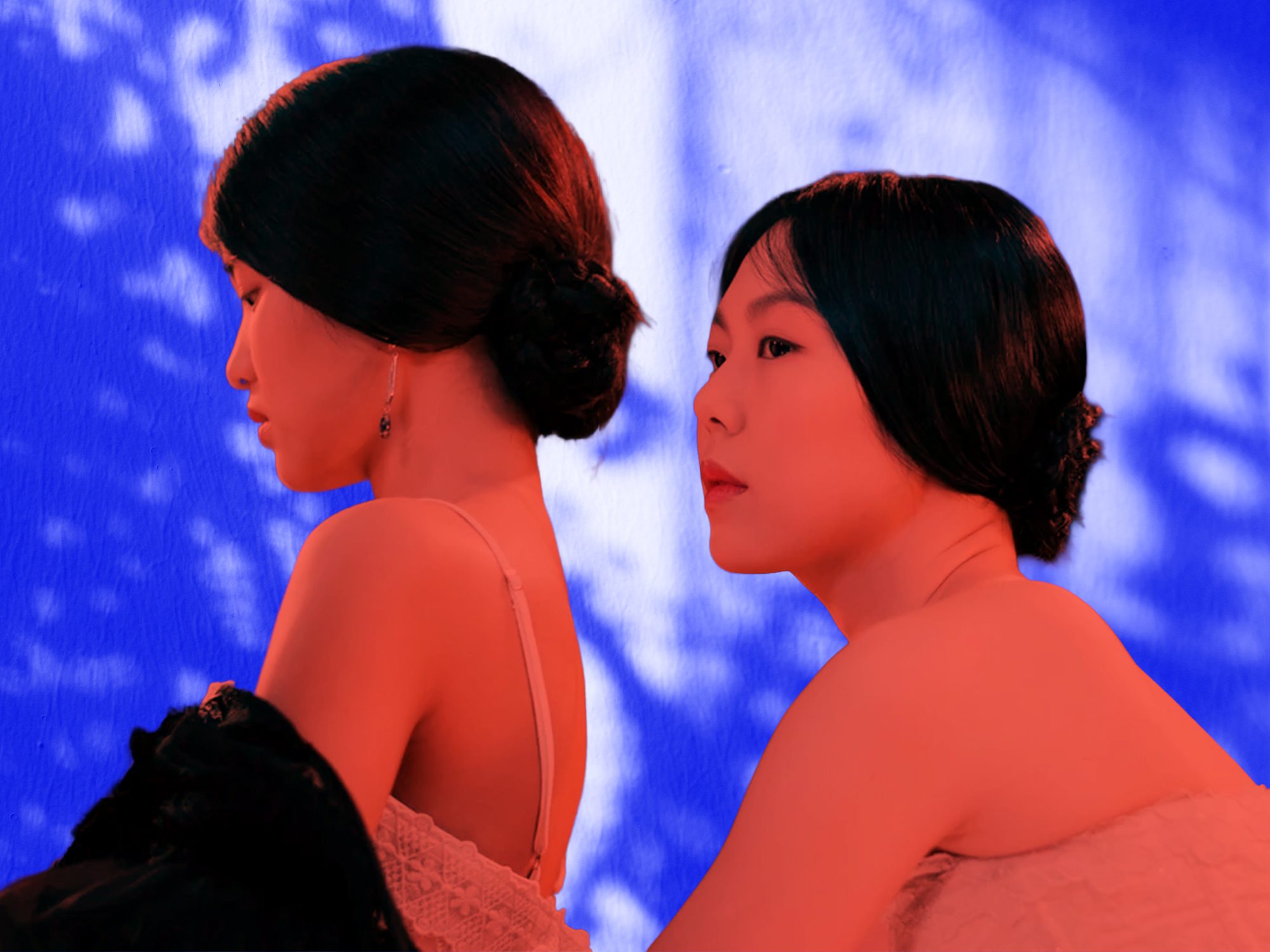
“Dressed up, you look like a lady too,” Hideko tells Sook-hee in a scintillating makeover scene, where Sook-hee trades her modest hanbok for Hideko’s Western finery. As Hideko turns Sook-hee around to unbutton her corset, the camera leans in and tightly frames their heads from behind, the two practically indistinguishable. The doubling of the women foreshadows the identity-swapping ploy to come, but it also exposes an anxious myth: the essential difference between lady and handmaiden, between Japan and Korea.
This is made even more apparent when their clothes come off. A chorus of gasps and moans build to a crescendo as the pair clasp hands and scissor vigorously, the writhing figures composed as mirror images of each other. At first glance, the entwined bodies of a Japanese lady and her Korean servant seem to serve as an apt metaphor for colonial intimacy, an acknowledgement of the fraught cultural and economic exchange between the two countries. But the passion and duration of the scene far exceed symbolism. In this unabashedly gaudy tableau of lesbian ecstasy, the anticipated violence between coloniser and colonised is usurped by rapturous sensuality.
Park built his international reputation on the violent delights of his Vengeance Trilogy, the vigilante protagonists of which single-mindedly devote themselves to revenge, only to be overcome by a sense of futility after the act. In The Handmaiden, love and sex are pursued with just as much fervour, but the outcome is far more transformative. On a narrative level, Hideko and Sook-hee’s desire for each other catalyses their mutual liberation, as they escape from their oppressive circumstances and sail towards a future together. On a deeper level, their passionate embrace subverts tired nationalistic binaries, shattering the taboo of depicting affinity between Japan and Korea with loudly unapologetic lesbian sex.
The film’s divisive sex scenes have been much maligned for their gratuitous endorsement of the ‘male gaze’, but is it not precisely this voyeuristic excess that we watch it for? From the decadent costumes to the feverish moaning, there is hardly anything modest about it. And if the film’s enduring popularity among lesbians tells us anything, it’s that women can be scopophiles, too.
What is remarkable about The Handmaiden is how stealthily it smuggles critique into its visual pleasures. At once a resplendent queer love story and a subtle examination of colonialism, every rewatch of its sumptuous staging invites us to notice even more delicious details and knotty complexities.