We got to work. We developed and workshopped material that I cobbled together into a performance score that we then shared publicly. As the academic year came to a close and I returned to Colorado, I couldn’t get the piece out of my head.
I started writing grant proposals and building a creative team. I invited two of the students
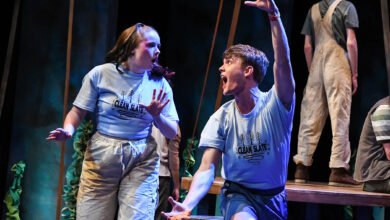
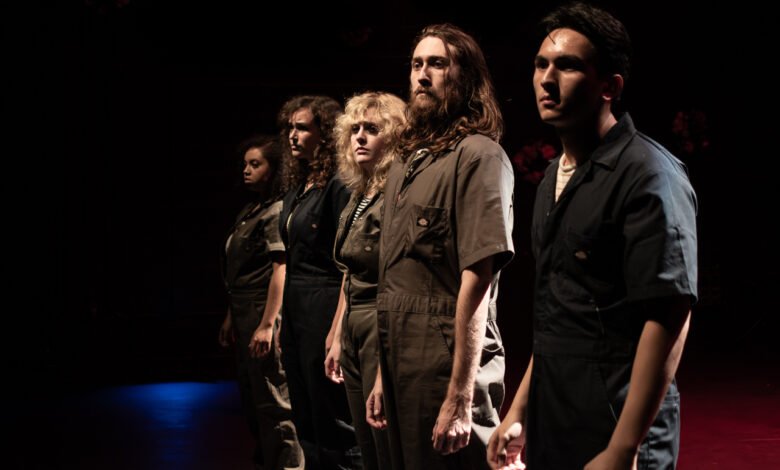
from Sewanee, Nathaniel Klein and Emma Miller, to continue collaborating on the piece. We were joined by my former students and frequent collaborators from the University of Colorado Boulder, designer Jess Buttery and stage manager Rosie Glasscock; current students from Hamilton College, Juliet Davidson, Del Gonzales, and Irmak Sağir; and a young actor I had worked with the year prior, Savanna Arellano, who is a former student of Jess’s from the Denver School of the Arts. Though we created the piece together, I took on the roles of head writer and director because of my experience operating in devising spaces and because the piece originated in a course I taught. My choice to assemble a team comprised entirely of current and former students (with one grandstudent thrown in for good measure) was not intentional. I offered slots to a few young artists who I had never collaborated with before, none of whom were able to commit to the project. Ultimately, our relationships became the structural underpinning of the piece itself, and the show became, in part, a dialogue between a teacher and her students.
My role as “teacher” inevitably bled over into the process. While I teach in a way that is less hierarchical than many university spaces, I’m still their professor. I’m the “subject area expert” and the person in control of their final grade. In much of their training, questioning professors and directors is not just discouraged; it’s unthinkable. I encourage my students to point out contradictions and hypocrisies, although I, like most people, don’t always love being confronted with my own. In my classes, I have regular opportunities to model sitting with that discomfort, and it’s a privilege I don’t take lightly. For Things We Will Miss, I invited these particular artists to work with me in part because I knew that they would push me. I believed that they respected me enough to hear my perspective, to trust me as their director and co-creator, and to challenge me when they felt I was missing something. They very much understood the assignment, in this respect.
Ultimately, our relationships became the structural underpinning of the piece itself, and the show became, in part, a dialogue between a teacher and her students.
We began working over Zoom, sharing thoughts and research—bits of text, sounds, images. We read the book of Revelation; we listened to Sufjan Stevens’s Convocations; we read the thirty-six-page synthesis report of the intergovernmental panel on climate change’s sixth assessment report. We watched gameplay of Oil Barons on YouTube and read works focused on climate world building intended to give us hope that it’s not, as Rebecca Solnit insists, “too late.” We staged our own deaths as a result of consequences of climate change: drownings, wildfires, resource scarcity.
Then, we spent the summer of 2023 in Boulder developing material on our feet. Two performers were for a time uncomfortable with a section called “The End of the World Dance Party,” a short improvisational movement piece using a collaboratively created and refined gestural vocabulary. They were frustrated by my assertion as director that all we needed for the moment to be effective was bodies in space, performers committed to a simple but thorough exploration of both gesture and architecture. They didn’t believe it could be interesting enough, that they could be interesting enough. This was not the sort of work that traditional scene study had prepared them for. Stripped of text, they became vulnerable, but this also made it possible for them to be known by different means. That was scary. I, along with their castmates, convinced them to try, and we rehearsed, and they gained confidence. They performed “The End of the World Dance Party” every night, and every night it was new and different and undeniably beautiful and compelling.