
News broke in February that the Chinese government-controlled company that owns the Waldorf Astoria was preparing to market the hotel portion less than a year after the building reopened.
The prize property, originally built in 1931 and considered one of the fanciest hotels in the world, was closed for eight years for a renovation that transformed 1.6 million square feet of the landmarked hotel into 375 luxury rooms and 372 condominium units with public spaces as lavish as in the original. Gold and silver leafing adorn the walls of the Basildon Room, and restored frescos the ceiling, The Real Deal reported in January. Hotel rooms are designed to feel residential; uniforms are new, and the hotel has a custom scent.
The owner, state-run Chinese firm Dajia Insurance Group, is expected to seek more than $1 billion. Despite the hefty price tag, so much was spent — $1.95 billion on the purchase and more than $2 billion on the overhaul — that any sale is unlikely to recoup the costs of redevelopment, industry insiders believe.
Yet as New York’s hotel market regains its footing after years of slower tourism, a potential sale of the famed Waldorf Astoria could be the industry’s biggest test yet. A $1 billion price tag would rank among the most expensive hotel trades in city history and provide a clear signal of how investors value Manhattan’s post-pandemic market, and if the gap between seller expectations and what lenders will finance is small enough for a deal to close.
“It’s clearly a bellwether. There’s no question about it,” hotel consultant Daniel Lesser of LW Hospitality Advisors said. “If a transaction is facilitated, I would not at all be surprised if it sets a new high-water mark on a per-unit basis.”
Eastdil Secured is marketing the property and did not immediately respond to a request for comment.
State of the market
Investors have been placing increasingly large bets on the luxury hotel market.
Miami-based Gencom, led by Karim Alibhai, acquired several marquee Manhattan hotels in the past two years, including the Ritz-Carlton Central Park South for about $320 million, the Thompson Central Park Hotel for $308 million and the InterContinental New York Times Square. Still, those deals traded at discounts to replacement costs, and the Waldorf may ultimately follow a similar path, Lesser said.
When China’s Anbang Insurance Group acquired the Waldorf in 2014, it had 1,400 rooms and needed an update. Reopening got delayed for reasons beyond on-the-ground delays: Anbang’s chief executive was arrested and sent to prison, prompting the Chinese government to seize control of the Waldorf in the midst of its renovation.
Scandals aside, the completed Waldorf is a trophy at a time when trophies are in demand. The hotel’s cachet could draw foreign buyers in search of a top-of-the-line asset.
“It’s come to market at a time where there’s definitely investor interest in New York City hotels at the high end and at the right basis,” Lesser said.
City hotels averaged 84.2 percent occupancy in 2025 — the highest rate among the country’s 25 largest hotel markets — led by the luxury sector, according to New York City Tourism + Conventions. The amount that consumers pay for hotels has gone up year over year in New York City, even as it has steadied at hotels across the country. JLL projects that hospitality transactions over $250 million will rise globally in 2026, according to a recent report.
Headwinds
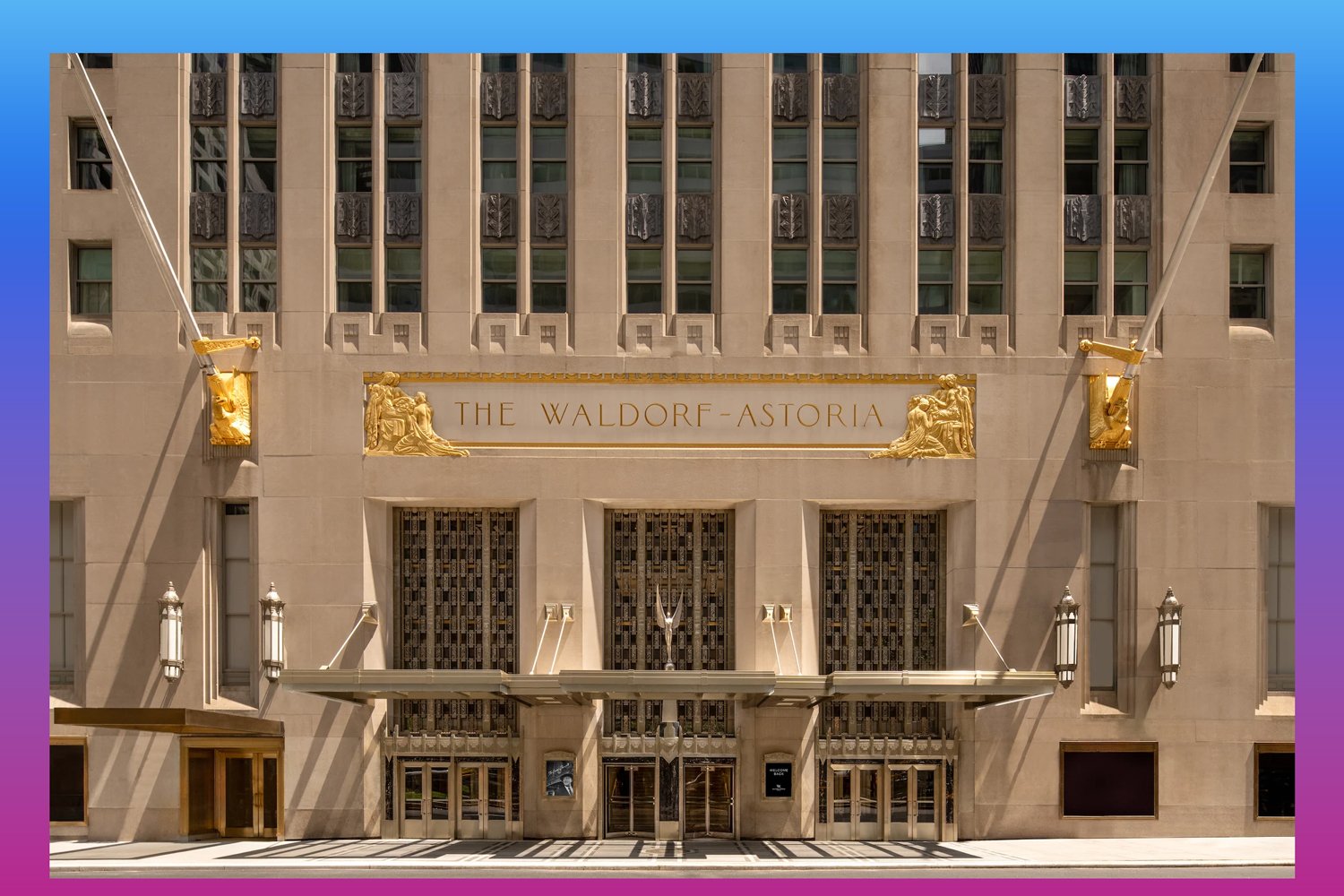
The Waldorf’s 372 condominium units were selling more slowly than initially anticipated, but closings have picked up speed, with 63 sales at an average price of $3,261 per square foot, according to Olshan Realty’s Donna Olshan. Only 30 were sold last September, Olshan told the Wall Street Journal at the time.
The condo component adds another wrinkle to the economics of a sale, which would include the hotel, shops, restaurants and amenities.
Because the hotel has been reopened for only a short period, there is limited financial history for investors to underwrite.
The ongoing geopolitical tensions in the Middle East could also affect the Waldorf because sovereign wealth funds and other overseas investors are widely viewed as the most likely buyers.
The marketing process has yet to fully launch, said Riana Stadlin of Hunter Hotel Advisors, as the conflict in the region has injected uncertainty into global capital markets.
Locally, the industry is also grappling with rising labor costs, inflation, tariffs, weak international tourism and New York’s notoriously high operating expenses. A new eight-year contract with the Hotel and Gaming Trades Council includes the largest wage increase for hotel workers in union history, putting more pressure on owners.
If the Waldorf trades at a discount, it would illustrate the financial challenges of hotel operations and investment.
But if the property sets a new pricing benchmark, it would reaffirm investor confidence in New York’s luxury market.
“It’s just such a case study, I think, in today’s market,” Stadlin said. “We’re finally starting to see a little bit of traction, especially New York City trades. But this one, obviously being the trade of all trades, will give people confidence because somebody is writing a check this big.”
Read more

At REBNY gala, Mamdani skips while Hochul pledges to continue as industry ally

Waldorf Astoria hits market after eight-year condo conversion

Hotel union deal puts cleaners on track for $100K salaries