It is said that renters have all the political power in New York City. How else to explain their robust benefits under rent stabilization, free legal services in housing court, preferential treatment by city agencies, a broker fee ban and other rights?
But tenants are not the top of the food chain. Homeowners are — despite being outnumbered two to one.
Homeowners reign in city politics because they vote more and move less. That’s why their property taxes are much lower than what apartment buildings pay.
Homeowners don’t have a powerful lobby group, hold mass demonstrations or storm the stage at public meetings. Occasionally some will oppose local rezonings that would erode their dominance by adding more housing.
In general, homeowners have little to complain about: Their property values have grown tremendously over the years while their property taxes have not.
Tenant groups are far more visible. They show up en masse at Rent Guidelines Board hearings with matching T-shirts. They protest outside buildings to shame landlords and developers. They pack buses and schlep to Albany by the thousands for tenant lobby days wearing “I’m a tenant and I vote” caps.
Never have I heard them demand lower property taxes for their buildings. That’s because they think lower taxes would only help landlords, not tenants.
Unless someone persuades tenants that property taxes increase their rents and starve their buildings of money for repairs, residential landlords will be at a disadvantage if Mayor Zohran Mamdani asks the City Council or Albany to lower their property taxes.
I hope the mayor will propose something before the state legislature reconvenes in January. He has committed to doing more than his predecessors on that front, although that won’t take much: Mayor Bill de Blasio’s tax commission infamously released its report only two days before he left office, and the Adams administration never even proposed a reform.
Rallying rent-stabilized tenants will be hard because as far as they’re concerned, the Rent Guidelines Board determines what they pay and the mayor promised them a rent freeze. But Mamdani’s voters tend to be free-market tenants, who suffer the most under the city’s twisted property tax regime.
Here are the facts about how the property tax system gives homeowners a discount at the expense of large apartment buildings.
Homes with three or fewer units account for 24 percent of sales-based property value in the city but pay only 14 percent of its real estate taxes, according to a new Furman Center report. (By “sales-based” we mean real-world values, not the fake “market value” assigned by the Department of Finance to bewilder people.)
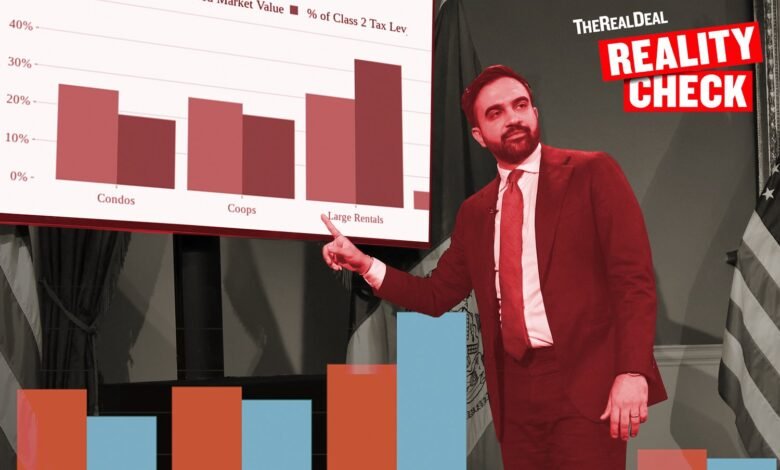
Class 2 properties (condos, co-ops and rentals) total 43 percent of sales-based value and pay 36 percent of the taxes. But within Class 2, homeowners are paying the least.
Condos have 26 percent of Class 2’s value but pay just 19 percent of the taxes. Co-ops have 26 percent of the value and pay 23 percent of the taxes.
Small rental buildings also get a pretty good deal. They account for 11 percent of Class 2’s real-world value and pay 9 percent of its taxes.
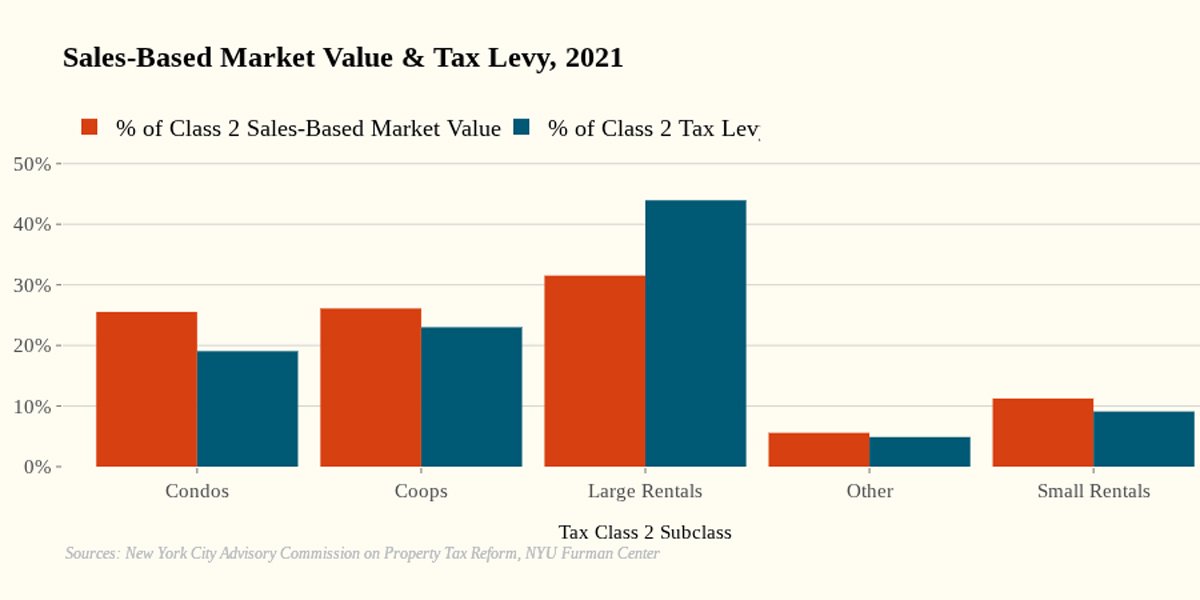
Who are the losers in Class 2? Large apartment buildings.
They account for 32 percent of the class’ total value but pay 44 percent of its taxes. The New York Apartment Association likes to say that property taxes account for 30 percent of rent. But that’s landlords’ problem, as far as tenants are concerned.
The NYAA’s Kenny Burgos has no pull with tenants. Mamdani does, but I doubt he will use it on the property tax issue. Politically, it’s better for him to keep tenants and landlords divided by perpetuating a “good versus evil” narrative. The same is true for activist groups.
Read more

“Winners and losers”: What if Mamdani finally reforms NYC property taxes?
Where de Blasio went wrong on property tax reform

The Daily Dirt: How to navigate a political third rail