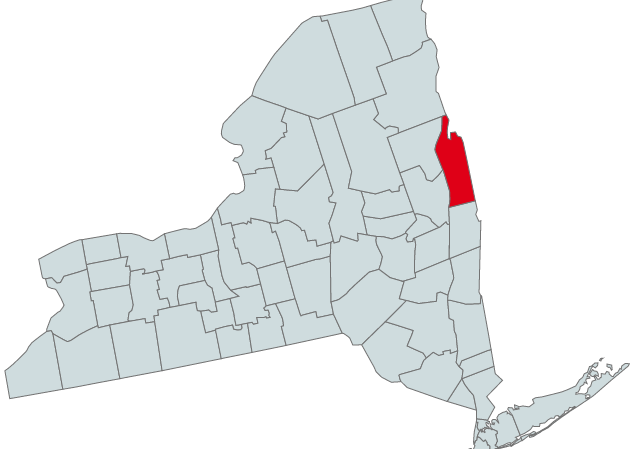
 Washington County, NY is an area rich in historical and cultural significance along New York’s border with Vermont, at the head of Lake Champlain and east of Lake George. Many of the County’s towns have been around since before the American Revolution. The county is bisected by the Champlain Canal and the Hudson River.
A rural, mostly farming community, the county has four historic covered bridges in Buskirk, Eagleville, Rexleigh, and Shushan. They are among the 35 sites in the county listed on the National Register. The 1793 Lemuel Haynes House, a National Historic Landmark, was the home of Lemuel Haynes (1753-1833), the first African-American clergyman ordained in North America.
The county also includes numerous small museums. Here is a list of ten that are worth a visit.
Pember Library and Museum of Natural History in Granville, NY
The Pember Museum collections are a wonderful example of the area’s biodiversity. Established in 1909 by Franklin Tanner Pember and his wife Ellen Wood Pember, the natural history museum features Franklin Pember’s own collected, natural specimens including mounted birds and mammals, bird nests and eggs, shells, insects, plants, and rocks and minerals from the Granville area and beyond.
Today there are over 7,000 objects in the collections of the Pember Museum, covering a wide variety of subjects, with nearly 80% of the collections on display.
Specimens include vertebrate (birds, mammals, and reptiles) and invertebrate animals (insects, arachnids, and sea life), rocks and minerals, fossils, some anthropological and historical materials, and a herbarium (dried plant specimens).
The Pember Museum is open year-round, but closed on Sundays and holidays.
Skenesborough Museum and Heritage Area Visitors Center in Whitehall, NY
Nestled in a valley at the head of Lake Champlain is Whitehall, the birthplace of the U.S. Navy. This Heritage Area Visitor Center resides in a 1917 canal terminal building that has been used as Skenesborough Museum since 1959. This museum encourages visitors to investigate the ambiance of 19th Century buildings along the Champlain Canal, which has been in use since 1823.
In addition to household artifacts found on the main floor of the museum, examples of 19th and 20th centuries can be found on the second floor, including quilts, a 100-year-old wedding dress, a watchmaker’s work stand, ice-cutting equipment, and a 1940s permanent wave machine. And outdoors on the museum grounds, you’ll find a Delaware & Hudson Railroad car and the remains of the once sunken 1814 US Navy schooner U.S.S. Ticonderoga.
Closed during winter. Hours vary, so check the website before visiting. While there, check out nearby Skene Manor, a Victorian Gothic-style mansion offering a unique tea room experience.
Rogers Island Visitors Center in Fort Edward, NY
Rogers Island Visitors Center is a gateway to pre-contact and colonial American history in Washington County. This unique museum explores the rich history of Rogers Island and nearby Fort Edward, originally constructed in 1709 during Queen Anne’s War as Fort Nicholson.
The first inhabitants of this area were Native Americans, who hunted and paddled the Hudson River here. At Rogers Island, you can see artifacts uncovered by a series of archaeological digs conducted by Dr. David Starbuck.
Rogers Island (and Fort Edward), a home base of Robert Rogers’ Rangers played a key role in the French and Indian War and the American Revolution, a history explored by a variety of unique exhibits throughout the museum.
Rogers Island Visitors Center is open from May to October, though they also host an annual guided moonlight snowshoe/walking tour of Rogers Island in mid-winter.
Slate Valley Museum in Granville, NY
The Slate Valley Museum celebrates the history and culture of the quarrying community that was established along the New York-Vermont border in the 1800s. Many slate quarries are still in operation, producing most of the colored roofing slate in the United States today.
The museum not only offers a glimpse into our area’s history through the quarrying community in the Slate Valley. They also collect, catalog, conserve, exhibit, and interpret materials that demonstrate the geology of slate. Open for the season from May through December.
Old Fort House Museum in Fort Edward, NY
Constructed in 1772 of timbers from the ruins of the French and Indian War fortification Fort Edward, the Old Fort House was used by both British and American troops as headquarters during the American Revolution. It’s owners included Dr. John Cochran, George Washington’s personal surgeon. Washington dined at the Old Fort House twice in July 1783, on his way to and from Crown Point.
In 1828, Solomon Northup and his bride Anne Hampton moved into the house and lived there until 1832. Northup was a free black man who grew up in Washington County and had been drugged and sold into slavery. Upon being freed, he wrote the book Twelve Years a Slave, widely considered to be one of the most important slave narratives.
The property is now home to several other historic buildings that have been acquired by the Fort Edward Historical Association, which operates the complex:
- The Riverside Schoolhouse (known as District #5 while still in use) was built at the turn of the 20th century along the banks of the Hudson River in Northumberland, Saratoga County.
- The Greek revival-style A. Dallas Wait Law Office, which was rescued from its former site and given to the Museum by Scott Paper Co. It is interpreted to represent a law office from the late 19th century, furnished with period barrister bookcases and law books.
- The Cronkhite Pavilion is one of the last surviving buildings of the original 1870 Washington County Fair, which was held at the current site of the Washington County Offices until the 1930s. Today, the building houses exhibits on local history.
- The Baldwin Barn was built around 1910 and now houses a significant Fort Edward pottery exhibit, as well as the museum’s gift shop, where historical books and maps are sold year-round.
Plus, nestled amongst the buildings is the Doctor’s Apothecary Garden, which contains more than twenty different species of plants used by Native Americans and colonists for medicinal purposes.
The museum is open seasonally from June through October, but tours of the museum campus are available by appointment for large groups, field trips, and educational group tours year-round.
Howard Hanna Museum and Memorial Civil War Enlistment Center
Housed in the former Elisha Straight house, the Museum and Enlistment Center is reported to be the oldest remaining house in the hamlet of Hartford, dating back to the early 1800s. The mission of the museum is to acquire, catalog, and display the history of the community.
The Civil War Enlistment Center, in which the men of Hartford enlisted in Company E of the 123rd Regiment of New York State Volunteers, is believed to be the only original Civil War enlistment center remaining in New York State. The collection concentrates on the men, their equipment, their 3,000-mile, three-year journey and the battles they fought in service to the United States.
The Museum and Enlistment Center are open to visitors on Sunday afternoons from 1 to 4 pm during July and August and at other times by appointment. School tours are also available.
Shushan Covered Bridge Museum
The Shushan Covered Bridge Museum, located in the hamlet of Shushan in the town of Salem, is housed in an old covered bridge built in 1858 by the Stevens Bros. The bridge was abandoned in favor of a more modern bridge in 1962 and sat in disrepair for more than a decade until it was saved by the Shushan Covered Bridge Association which converted it into a museum. A collection of period machinery and farm implements, many in working order, can be used by visitors for hands-on demonstrations.
Additionally, a few yards from the bridge entrance stands a one-room schoolhouse that was in continuous use from 1852 to 1943. The school is open to visitors and is furnished with desks and texts from the 19th century.
The Shushan Covered Bridge Museum is closed during the winter season with select hours during spring, summer, and fall. It is open by special appointment any day.
Cambridge Historical Society and Museum
Residing in a house built in 1869, the Cambridge Historical Society was established in 1929 with the mission of preserving the history of Cambridge and the surrounding area for the enjoyment and education of the community and visitors.
The house is an example of period architecture, featuring a mansard roof, wrap-around verandah, and ornate exterior moldings. The front door contains leaded glass windows and opens into a spacious hallway, which features both a beautifully curved stairway leading to the upper floors and a period, framed, floor-to-ceiling mirror with a marble shelf.
Rooms in the museum include displays of 19th-century Cambridge-made Barton Furniture, Revolutionary and Civil War memorabilia, fire fighting exhibits, as well as early china, pewter, glassware, and antique kitchen utensils. Plus, visitors will also find beautiful in-period examples of 19th-century textiles: quilts, homespun coverlets and bedding, period clothing, and accessories. Upstairs rooms include a beautiful period master bedroom, a children’s room, and a resource room.
William Miller Home & Farm in Low Hampton
The William Miller Home and Chapel are known as the “Birthplace of Adventism in America.” William Miller (1782–1849) was an American clergyman who is credited with beginning the mid-19th-century North American religious movement known as Millerism.
After his proclamation of the Second Coming did not occur as expected October 22, 1844, new heirs of his message emerged, including the Advent Christians (1860), the Seventh-day Adventists (1863) and other Adventist movements.
The site includes the home, farm buildings, chapel, and Ascension Rock. Also located nearby is the cemetery where William and Lucy Miller are buried.
Open April 1 – November 30; open by appointment only from December 1 to March 31.
The Georgi on the Battenkill Community Park and Museum in Shushan
The Georgi on the Battenkill Community Park and Museum is nestled along the Battenkill, just west of the Vermont border.
Donated to the town by the namesake family, the beautiful family home is now a museum displaying the family’s art and natural history collections, which include: Italian, Dutch, Flemish, German, and French paintings from the fourteenth through the eighteenth centuries; Asian tapestries and figurines; Stained glass windows featuring panels of glass based on a woodcut by Hans Weidtz; and an extensive and complete mineral collection with samples from as far away as South Africa pieced together over a lifetime by Henry Georgi, an engineering geologist.
The Georgi also boasts nine acres of lush lawns, gardens, and a row of 60+-year-old Hydrangeas. The Community Park and its public restrooms are open from May through November.
Visit Washington County Tourism’s website to learn more about visiting Washington County.
Read more about Washington County’s history, natural history, arts recreation and more.
Send a list like this for your county by emailing nyalmanack@gmail.com.
Source link