 Long before mushrooms and mycology captivated the public imagination, self-taught scientist Mary Elizabeth Banning (1822–1903) dedicated her life to the study of fungi. However, due to her gender, her work remained unrecognized for almost 100 years.
Banning was one of America’s first mycologists, who uncovered, documented, and illustrated 23 fungal species new to science in the mid-1800s.
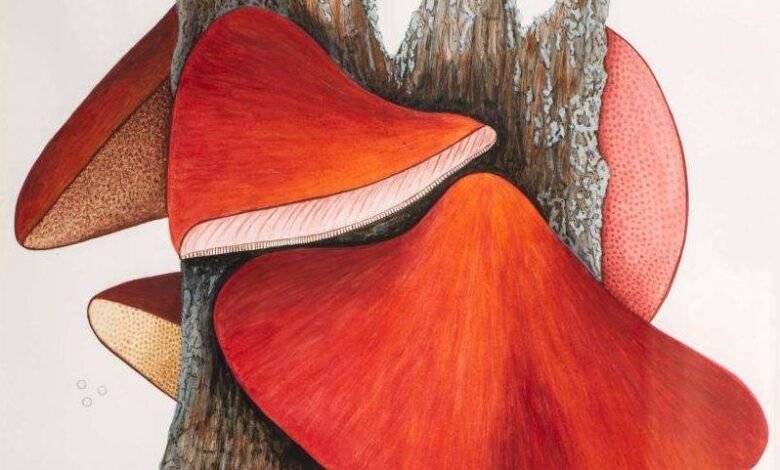
 Banning, devoting any precious free time she had outside of domestic obligations to her research, completed her unpublished manuscript, Fungi of Maryland, in 1899. The manuscript contained 175 exquisite watercolor illustrations and descriptions of mushroom species. (You can see those here).
It was entrusted to then-New York State Museum Mycologist Charles Peck and remained hidden in the Museum’s collection for nearly a century before being rediscovered in the 1980s.
“Just as fungi were seen throughout history as ‘outcasts’ by Western European scholars, so too were women, including Mary Banning,” Curator of Mycology Dr. Patricia Kaishian.
The New York State Museum’s latest exhibit, “Outcasts: Mary Banning’s World of Mushrooms,” celebrates Banning’s rich legacy.
“Mycology has a long, vast history, and Banning’s legacy deserves to be widely known and celebrated. Our team has spent months reviewing her inspiring work in order to craft a comprehensive, interactive exhibit that not only tells the story of fungal research, but that of a woman who dedicated herself to science despite many obstacles. Many of these artifacts have not been on display in several decades, presenting a rare opportunity for visitors of all ages and backgrounds.”
 This new exhibit features some of the most prized objects in the Museum’s collections, including: 28 original watercolors illustrated by Banning, which will be rotated every six months to ensure best archival practices; Banning’s manuscript and book cover; an 11-foot-long fossilized fungus found in Orange County, N.Y., estimated to be 370-420 million years old; and 12 wax mushroom sculptures completed in 1917 by Henri Marchand as a gift for Peck.
To further increase accessibility, each watercolor features a QR-coded label leading to a dedicated webpage with the text of Banning’s detailed description. The exhibit also includes an interactive wall allowing visitors to explore what a mushroom feels like and a 3D tactile table bringing Banning’s illustrations to life for guests with visual impairments and low vision.
The New York State Museum is located on Madison Avenue in Albany.
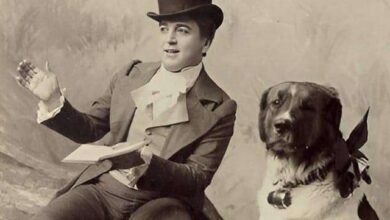
Illustrations, from above: Watercolor of Fistulina hepatica by Mary Elizabeth Banning, late 1800s; a portrait of Mary Banning; and Amanita banningiana, named for Banning.
Source link