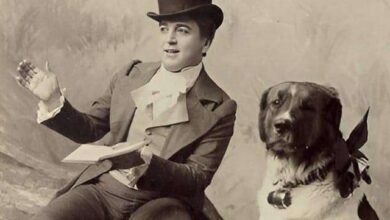
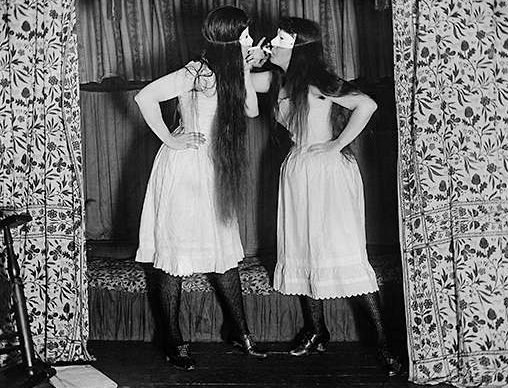
 Staten Island photographer Elizabeth Alice Austen (1866–1952) is best known for her street photography and intimate depictions of women’s lives and relationships in the Victorian era.
“New Eyes on Alice Austen,” a groundbreaking permanent exhibition at the Alice Austen House Museum finally puts her into an appropriate LGBTQ+ history context with respect denied her during her lifetime.
From the mid-1890s to 1912, Austen worked photographing the equipment and conditions at the Quarantine Station of Ellis Island. She produced over 7,000 photographs up through the 1930s, most notably depicting New York’s immigrants, the private lives and activities of Victorian women, and her travels to Europe.
Austin’s great-great-grandfather was Peter Townsend, the owner of Sterling Iron Works which forged the Hudson River chains used as defense against British ships during the American Revolutionary War.
 Austen’s father abandoned the family around 1869, prompting her and her mother to move to her family’s Victorian Gothic farmhouse, nicknamed “Clear Comfort,” where they lived with Austen’s maternal grandparents, her uncle Oswald who taught her photography at the age of 10, and her aunt and her husband.
Austen was an active member of Staten Island society, founding the Staten Island Garden Club and participating in the Staten Island Bicycle Club. She was one of the first women to own a car in Staten Island.
She met her life-long companion and lover Gertrude Tate, a teacher from Brooklyn, while on vacation in the Catskills.
Austen lost her savings in the Wall Street Crash of 1929, and the couple struggled throughout the Great Depression, offering dance classes and opening a tea room.
In 1945, they were evicted from Austin’s family home, and her archive was entrusted to her longtime friend Loring McMillen at the Staten Island Historical Society (now known as Historic Richmond Town).
 In 1949 Austin was declared a pauper by the state and transferred to the New York City Farm Colony, a a Staten Island poorhouse. Tate moved to Jackson Heights, Queens to live with her family, who disapproved of her relationship with Austen.
In 1951, LIFE magazine discovered her photos at the Staten Island Historical Society and the resulting increased interest in her work – including the Staten Island Historical Society’s “Alice Austen Day” featuring the first public exhibit of Austen’s work – which provided the funds for her to move to a private nursing home.
Austen died June 9, 1952, after a stroke and was buried in her family’s plot in Moravian Cemetery in Staten Island. Despite their wish to be buried together, Gertrude Tate was buried in Cypress Hills Cemetery in Brooklyn after her death in 1962.
In June 2025, Historic Richmond Town returned Austen’s photographic archive to the Alice Austen House after more than 80 years.
The Alice Austen House Museum is located at 2 Hylan Boulevard in the Rosebank section of Staten Island, New York City.
Upcoming Event
The Archives Partnership Trust will host a free conversation exploring the exhibit “New Eyes on Alice Austen” during a virtual program on June 11, 2026, from 12:30 to 1:30 pm.
The exhibition highlights Austen’s remarkable contributions to photography, immigration history, women’s history, and LGBTQ history. It fully embraces Austen’s personal story and centers her loving 55-year relationship with Gertrude Tate.
The conversation will focus on how this new lens on Austen’s story invites visitors, students, and scholars to experience her life’s work with greater honesty, context, and connection than ever before.
Read more stories about Staten Island.
Illustrations, from above: Austen’s photo of a New York City emigrant and pretzel vendor; Alice Austen and Trude Eccleston (Alice Austen House Museum); and Alice Austen House in 2002 (National Park Service).
Source link