 The institution of race-based slavery in what is now New York dates to 1627 when 22 enslaved Africans were brought to New Amsterdam (now New York City) by the Dutch West Indies Company. From that day forward some Americans opposed slavery and sought its abolition.
The National Abolition Hall of Fame and Museum in Madison County, NY, has announced four abolitionists will be inducted this fall: Black Americans William Wells Brown and Samuel Ringgold Ward, and also William and John Jay II – descendants of American Patriot John Jay.
William Wells Brown (1814-1884) was born enslaved by Dr. John Young near Mount Sterling, Kentucky. He escaped to Ohio in 1834 at the age of 19, making his way to Boston, where he worked for abolitionist causes and became a prolific writer.
While working for abolition, Brown also supported causes including: temperance, women’s suffrage, pacifism, and prison reform.
His brother Joseph (whose paternal grandfather is believed to have been Daniel Boone) has been identified by researchers Ron L. Jackson Jr. and Lee Spencer White as Joe, enslaved by Alamo, Texas commander William B. Travis. Joe was one of the few survivors of the 1836 Battle of the Alamo.
 From 1836 to about 1845, William lived in Buffalo, NY, where he worked on a steamboat on Lake Erie, helping many fugitive slaves to freedom by hiding them on the boat to take them to Buffalo, or Detroit, Michigan, or across the lake to Canada.
He later wrote that during the seven-month period of time from May to December 1842, he had helped 69 fugitives reach Canada.
Brown wrote a narrative about his enslavement, which was published in 1847, Narrative of William W. Brown, a Fugitive Slave, Written by Himself.
He also authored a novel about the relationship between Thomas Jefferson and the enslaved Sally Hemmings, believed to be the first novel by a Black American, Clotel (1853), published in London.
Following the Civil War, he wrote what is considered the first history of African Americans in the Revolutionary War, The Negro in the American Rebellion (1867).
Some 5,000 to 8,000 African Americans, both free and enslaved, fought for the Patriot cause; about 20,000 joined the British cause, which promised freedom to enslaved people.
Samuel Ringgold Ward (1817-1866) was also enslaved in the South, having been born into slavery in 1817 on Maryland‘s eastern shore. In 1820, Ward and his parents escaped to New Jersey and then relocated to New York in 1826, where Ward’s parents enrolled him in the African Free School.
 Ward became a pastor and orator for the American Anti-Slavery Society. He aided in the rescue of a fugitive slave in Syracuse, editor of two abolitionist newspapers, the Farmer and Northern Star, and Boston’s Impartial Citizen.
In 1848, he was nominated to be New York abolitionist Gerrit Smith’s vice-presidential running mate on the Liberty Party ticket, making Ward the first African American man nominated for national political office.
With Frederick Douglass, Ward helped organize the American League of Colored Laborers, the first black American labor union in 1850.
He and his family settled in Cortland, NY, and then moved to Syracuse in 1851 where that October he participated in the “Jerry Rescue,” and afterward was forced to flee to Canada. There, he worked with Mary Ann Shadd to found a newspaper, The Provincial Freeman, in 1853.
He also traveled to England and worked to raise money for the abolitionist cause. He was author of the influential book Autobiography of a Fugitive Negro: his anti-slavery labours in the United States, Canada and England, written after his speeches throughout Britain in 1853.
In the late 1850s he moved to Jamaica.
 William Jay (1789-1858), John Jay’s son, served as a judge and began his efforts against slavery in the 1820s. Co-founder of both the American Anti-Slavery Society and the American and Foreign Anti-Slavery Society, he provided shelter to freedom seekers escaping slavery and legal aid to free Black people who were wrongfully imprisoned. He was later removed as a judge in retaliation.
John Jay II (1817-1894) was William Jay’s son. Inspired by his father and grandfather, he became involved in the abolition movement as a college student. He was active in the Underground Railroad, a network that helped enslaved people escape the horrors of Southern slavery, and worked with Stephen and Harriet Meyers in Albany, NY. He also worked with the anti-slavery Free Soil Party.
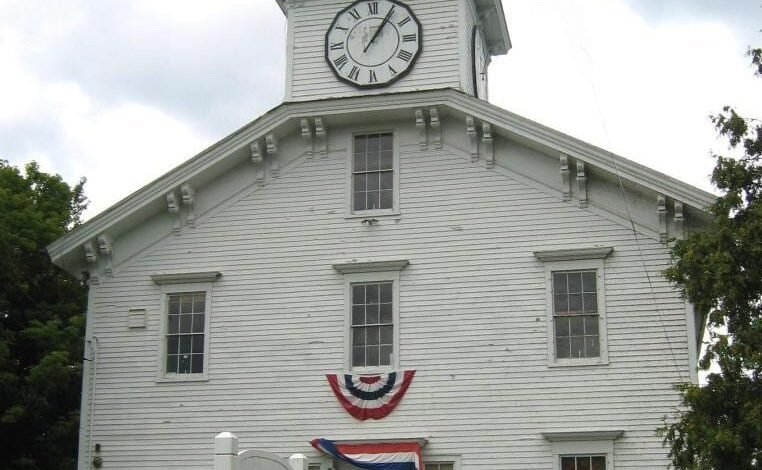
Founded in 2004, the National Abolition Hall of Fame and Museum is in Peterboro, Madison County. Inductions take place every two years and the upcoming induction will be in October 2026.
The Hall currently features 32 inductees and is located in the same building in which the New York Anti-Slavery Society was organized in 1835.
2027 will mark the 400th anniversary of the arrival of the first enslaved Africans to New York and the 200th anniversary of the end of legalized slavery in New York. Read more about those events here.
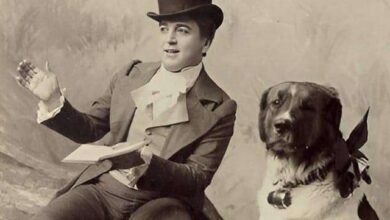
Illustrations, from above: The National Abolition Hall of Fame and Museum (provided); William Wells Brown from his book, Three Years in Europe: Places I Have Seen and People I Have Met; Samuel Ringgold Ward in 1855; and a daguerreotype of William Jay taken between 1840 and 1858.
Source link