 Historic landmarks are important resources in part because they help make the lives of the past more tangible — and help each of us see ourselves in history. Places significant to LGBTQ+ communities, however, can be overlooked because many of these communities formed out of the public eye by necessity, often receiving little mainstream attention at the time.
As people age and disperse, and as many sites close or are repurposed under new ownership, knowledge of these places’ significance can fade, along with the irreplaceable opportunity to document and preserve them.
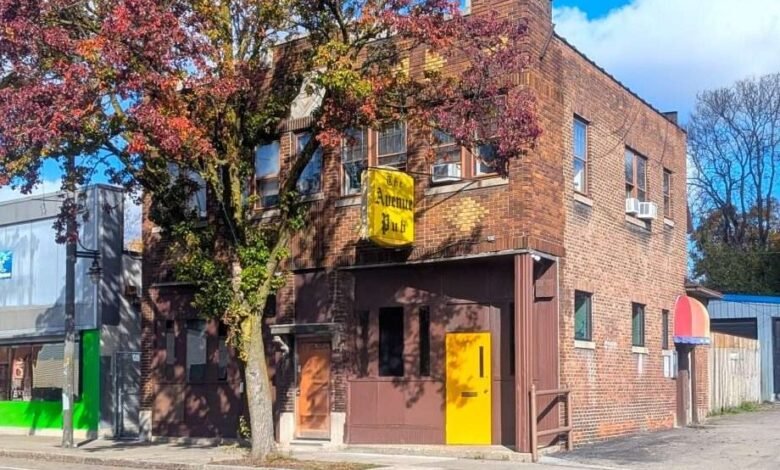
Landmarks like the recently closed Avenue Pub on Monroe Avenue in Rochester — a place of LGBTQ+ community for half a century — are valuable resources in telling our collective story in all its complexity and nuance.
Yet without documentation and recognition, sites connected to historically marginalized communities can be quickly lost, sometimes without anyone realizing what has disappeared.
Through its LGBTQ+ Landmarks Initiative, The Landmark Society of Western New York works with community partners and stakeholders to identify and elevate places significant to local LGBTQ+ history. Walking tours, interviews, and archival research have helped make LGBTQ+ landmarks more visible in Rochester today and have yielded narratives strong enough to support formal recognition.
For example, the University of Rochester’s Todd Union was listed on the National Register of Historic Places specifically for its significance as the first meeting place for the Gay Liberation Front in Rochester.
Important sites tied to the community’s experience with AIDS have also been documented, including the building that now houses Abilene Bar & Lounge on Liberty Pole Way, but was once Tara’s — a piano bar that offered upstairs space to the first AIDS Rochester office.
Still, this work remains vast and urgent. Many LGBTQ+ people grow up in straight families and may not inherit intergenerational connections to community history in the same way other groups sometimes can.
Combined with decades of enforced secrecy and the historical pressure to remain “in the closet,” many significant LGBTQ+ places were never formally recorded. Without proactive effort, we risk losing these sites without ever knowing what they were.
Notably, in Western New York there are currently only two National Register–listed properties explicitly recognized for LGBTQ+ significance: Todd Union and the Jemima Wilkinson House in Jerusalem (Yates County), recently updated to include LGBTQ+ history related to The Public Universal Friend.
Other sites, such as Genesee Valley Park, have significant LGBTQ+ ties, while many more remain unknown and undocumented. In a moment when LGBTQ+ history is increasingly threatened by erasure and censure, The Landmark Society of Western New York has included the region’s Historic LGBTQ+ Community Sites in its 2026 Five to Revive — a list that identifies opportunities for targeted strategic revitalization. The list calls attention to sites across Western New York in need of rehabilitation.
Through this list, the organization hopes to facilitate investment and protect the area’s architectural heritage, by working with owners, developers, investors, and other partners to create connections and reactivate buildings in their communities.
Learn more about the 2026 Five to Revive.
Read more about Historic Preservation in New York State.
Photo of the former Avenue Pub on Monroe Avenue in Rochester, ca. 2025 provided by The Landmark Society of Western New York.
Source link