 John Bird Burnham (1869-1939), Chief Game Protector for the state of New York in the early 1900s, once made an observation worthy of Alexis de Tocqueville’s Democracy in America.
“The union of monarchial game laws with an anti-monarchial sentiment make for an impossible marriage, and in America, drastic prohibitions on hunting can never be as effective as they are in England,” he wrote.
Burnham traced New York’s game laws to the democratic spirit. These laws hold that the people, and not the owner of the property on whose land the game is found, own the deer, the bear, the turkey, the ruffed grouse.
The most dogmatic property rights activist is filled with righteous indignation if access to a buck is impeded by “no trespassing” signs.
There are restrictions, of course, but these restrictions are the game laws and regulations that we ourselves have adopted, and which protect the commonly owned property.
Compare our game laws and traditions with those of England at the time of the American Revolution.
The right to hunt was reserved for royalty and landholders who were granted the king’s favor. One such royal preserve was in the neighborhood of Selborne, famous today primarily for its vicar, Gilbert White (1720-1793), the author of The Natural History of Selborne.
The red deer of Wolmar were descendants of those originally herded into the forest by William the Conqueror (1028-1087) or one of his barons. Queen Anne (1665-1714), in the first years of the 18th century, “saw with great complacency and satisfaction” the whole herd, by then five hundred head.
By George III’s day (1738-1820), the stock had been decimated by poachers. As a last resort, the royal owner ordered his huntsman and six assistants, “in scarlet jackets laced with gold, attended by the stag-hounds,” to round up the few remaining stags and hinds and take them in carts to Windsor.
According to Rev. White, poaching was such a problem because “the temptation is irresistible; for most men are sportsmen by constitution, and there is such an inherent spirit for hunting in human nature, as scarce any inhibitions can restrain.”
However much harm deer may do to a crop, “the injury to the morals of the people (as a result of poaching) is of more moment.” It turns them into criminals.
Robert Walpole, George I’s chief minister, determined that they should be treated as such. He was responsible for the Black Act of 1723.
According to the stipulations of this law, poachers, or anyone caught blacking his face in as preparation for poaching, could be, and often was, hanged.
Americans have never been that harsh with poachers. In Warrensburg, NY, once upon a time, one was even elected Town Supervisor.
Still, we are outraged when we learn that someone was caught jacking deer, from Environmental Conservation weekly reports or from a news article like the ones that appeared about “King Louie,” a prize buck that was illegally taken in Fulton County.
After all, poaching is theft, theft of property owned by we the people, in common. That is a legacy of the American Revolution that few give much thought to.
Read more about hunting, poaching, or the American Revolution.
A version of this article first appeared on the Lake George Mirror, America’s oldest resort paper, covering Lake George and its surrounding environs. You can subscribe to the Mirror HERE.
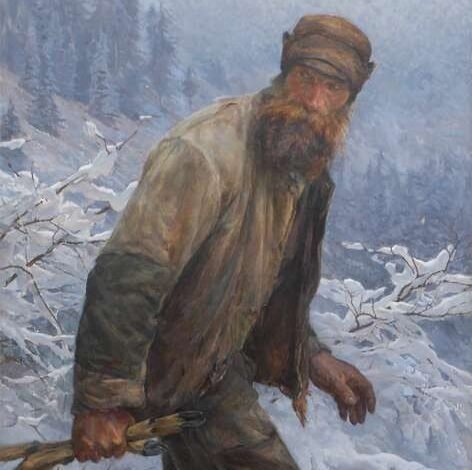
Illustration: “The Poacher” by Frédéric Rouge (1867–1950).
Source link