Instagram announced a major algorithm update today that could have a significant impact on content reach in the app.
Starting this week, IG is implementing a new system that will no longer recommend photos and carousel posts from aggregator accounts within Explore and other surfaces.
As per Instagram: “Original creators are the heart of Instagram. Whether you’re an artist sharing your perspective or a creator documenting your life through carousels, you deserve credit for the content you make. We know how frustrating it can be to see aggregators benefit from your work.”
In order to address this, Instagram will now give original content higher priority, while penalizing the reach of re-posting profiles that can sometimes end up generating even more traction than the original.
The update is an expansion of the system Instagram implemented for Reels in 2024, which has already driven significant reach benefits for creators. In the second half of 2025, for example, Meta reported that both views and time spent watching original Reels on Facebook approximately doubled year over year.
As such, it makes sense for Meta to expand on this and ensure that original creators have more motivation to keep posting in its apps.
Though that might also impact posting approaches overall and raise questions about what original content in this context actually means.
To help creators understand, Instagram also provided an overview of how it assesses content, as well as the key elements the platform looks at.
Those are:
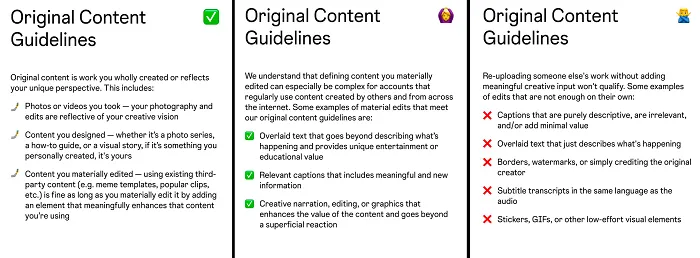
- Instagram will assess accounts on a rolling month-by-month basis. If most of what an account posts within that 30-day period are re-posts, it will be considered an aggregator account
- Other than original uploads, Instagram will also accept photo series, how-to guides and visual stories as original content
- Content that uses third-party material is fine as long as the poster adds something original to the post. “To assess if the edits you’ve made are sufficient, ask yourself if they add real value beyond just simply restating or referencing the third-party content,” Instagram said.
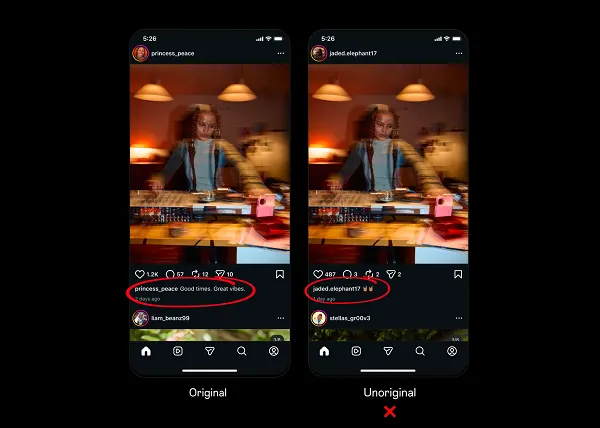
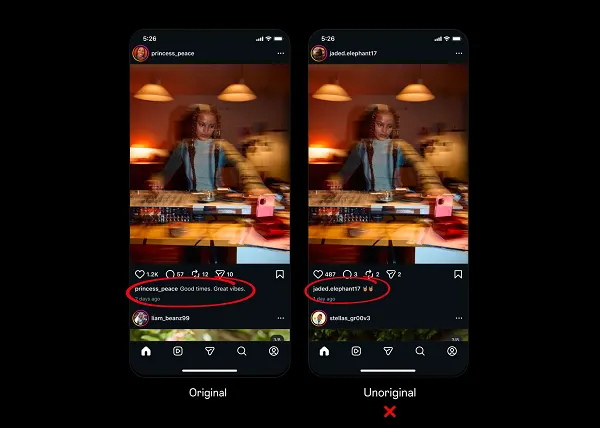
Instagram also provided an overview explainer to assist:
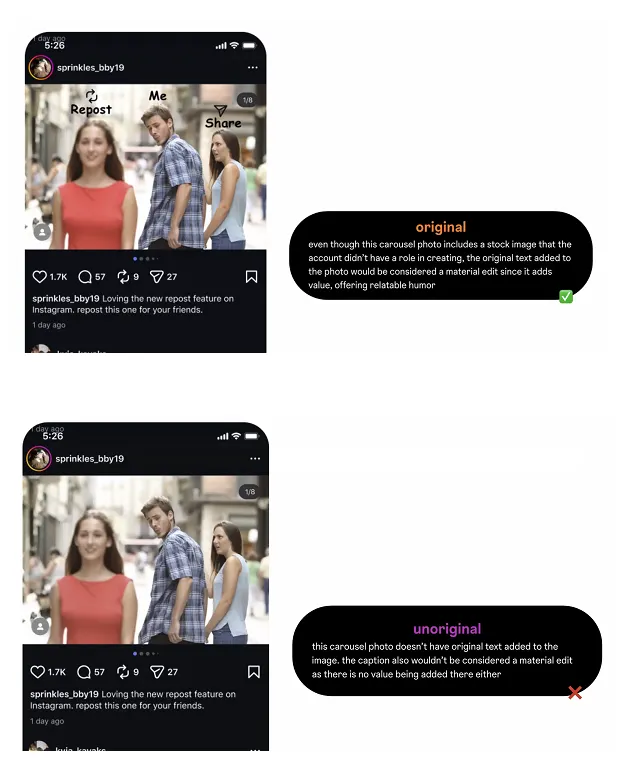
So what does that mean for memes, and image-based posts that are largely re-posts, with only a small amount of fresh content?
IG also provided an example on this front, as per this update from creator economy expert Lia Haberman:
Instagram further noted that the update will not change how it displays content to followers of an account. This update will also not impact “a set of publishers we’ve identified who have licensing agreements and/or explicit permissions from content creators,” the app said.
But any re-posting outside of this will likely see less reach, while creators, consequently, should see more recommendations and traction.
In order to play it safe, Instagram recommended that creators who want to share another creator’s content use built-in sharing tools like collabs, remix or the paid partnership label for branded content.
“If you want to shine a spotlight on third-party content you find interesting, share content to your story or use reposts,” Instagram said. “These options easily highlight other people’s work while ensuring the original creator receives proper attribution.”
It could be a good update, ensuring that original creators get more recognition, though this may also impact the overall IG ecosystem.
Aggregators play such a big part in trends these days that penalizing them could limit the spread of content through the app, and could also make being on Instagram a less engaging experience overall. The platform clearly doesn’t think this will be a problem though, and given the rising popularity of Reels, even after Instagram implemented a similar change there two years ago, the app obviously believes this won’t have a negative effect on overall usage trends.
As such, it may be a helpful push to redirect more attention to original posters, which could in turn play a significant role in keeping them sharing their content in the app.
And Meta needs original content, both for user engagement, and to fuel its artificial intelligence systems with a wider breadth of input.