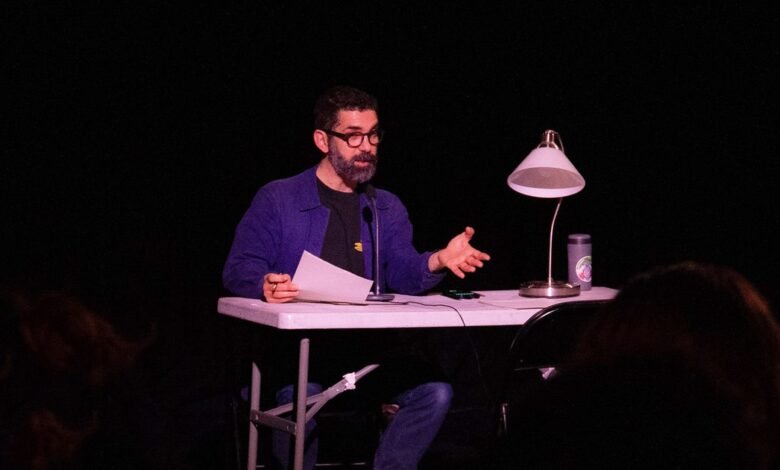
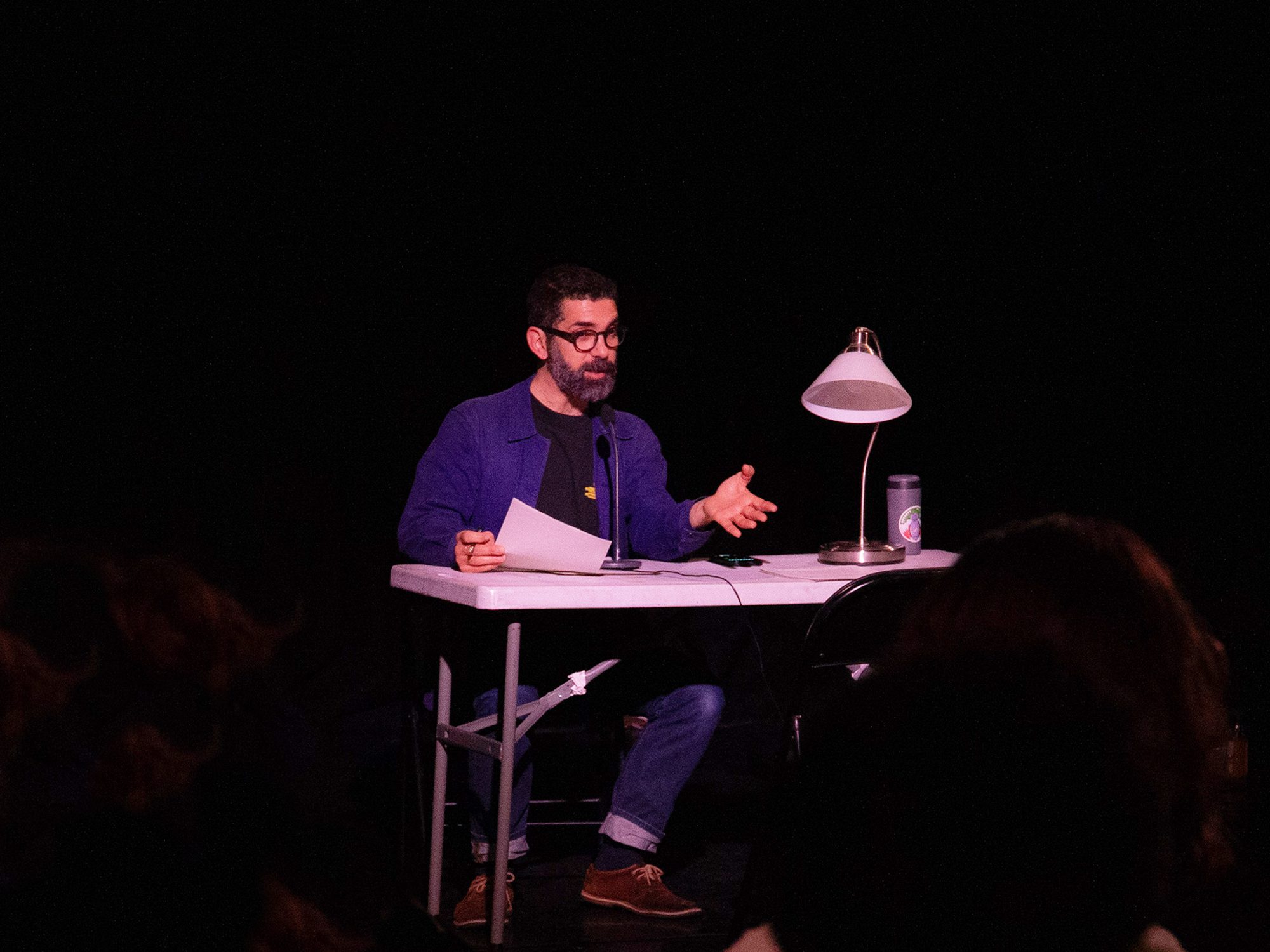
As a Palestinian filmmaker, Farouky has first-handedly experienced the fickle franchising of radical aesthetics from national platforms. He has previously been invited to screen his work at international film forums such as the Berlinale, alongside fellow Palestinian filmmakers, in many cases speaking out against the genocide at the risk of their own lives. However, recently the mainstream circuit has drastically shifted to adopt a value system of the ‘apolitical film’ which no longer has an interest in feigning radicalism, refusing to recognise the struggle towards mobilising a globally concerned film community.
A solution for this seems to be a pivot towards the grassroots screening space as an expressive option for radical filmmakers. Farouky states that the project is incredibly flexible to adapting its structure, grappling with the immediate issues of the present. “I think in terms of the film school, there’s a really amazing operation of the yearly intake and this assessment of the new participants, but also what you’re doing and we’re teaching in any given year”. It’s refreshing to hear this feedback loop; newcomers to filmmaking are valued not only for their enthusiasm to learn, but more so for the external perspectives they might bring along with them. The RFS clearly envisions a film industry that is malleable, open to reformation, interrogation and change.
This is what’s so particularly compelling about the programme – it’s not offering an outright rejection of national funding, or work made to imitate the ideals of the film institution, but rather a savvy and learnt approach to renewing this from the inside, or alongside. One of Farouky’s major inspirations for the project is director Jean-Luc Godard, who of course has been celebrated endlessly by Cannes and valourised as the darling of cinephiles. However, despite his laurels, Godard retained a consistent pushback towards the canon’s cult obsession with his mode of French New Wave. He delved into a chapter of deeply activist filmmaking; leading student protests which even shut down Cannes in 1968, and indicated the beginning of his so-called ‘revolutionary phase’.
It’s easy to point here to the legacy of bygone radicals, but in today’s crippling reliance of creatives on mainstream funding models, amidst a swamp of commercial visual technology and curated media consumption, what kind of reprieve can cinema truly offer? The RFS’s involvement with London-based festival Open City Documentary offers some insight into how we can utilise film as protest. For the 2026 edition, a former film school participant designed a workshop and screening event around sending letters to imprisoned Palestinian activists, curating films as testimonials of relationships affected by incarceration. ‘Letters to a Revolutionary’ taught attendees to craft statements of solidarity to prisoners via physical letters, voice notes, video clips and cat memes.
Farouky notes that “even making someone laugh is a subversion of the prison system, even a meaningless meme becomes a subversion. It became this way of not only teaching people a different form of visual communication, but being in the same room together and sharing the experience, so it became about building networks, and that collective physical space of solidarity.” This is another element of the school’s work: even if the films themselves disappear or collapse under censorship, the community of filmmakers and conversations that were had during production remain. Farouky’s experiences both within film’s institutional framework and outside of it clearly shape the idea that censored cinema still activates collective purpose.
The RFS even brought in industry representatives dealing with career mobility and marginalisation for discussions with the students. “We have very open conversations, all off the record about all of these problems, with great filmmakers who people admire and look up to. Our students actually get to ask: ‘how do you make a living?’ or, ‘how do you deal with racism, or classism in the industry?’ and lots of them say, ‘I still haven’t solved it.’ It’s also giving these professionals a space to talk outside of their work, investigating how they maintain a political stance, and learning from this even as a mentor,” he says. There’s an open flow of information here, a space for idea-making that even seasoned filmmakers can access and take with them into their practice.
As a curator from a working class background, it’s galvanizing to consider that there are figures leading culture who are critically invested in making film a more accessible workplace, and safer space for new modes of thinking. In a time of increasing national censorship, it’s liberating to sense the heartbeat of cinematic solidarity as a pulse in London. Godard was inspired himself by Soviet pioneer Dziga Vertov, and with Third Cinema producing the Indian Parallel Cinema, Brazil’s Cinema Novo, and the Cuban revolutionaries, it’s clear that the RFS then represents a British arm of militant, impact driven filmmakers, who are in the throes of reimagining, and actualising, a fertile and resounding UK filmmaking culture.