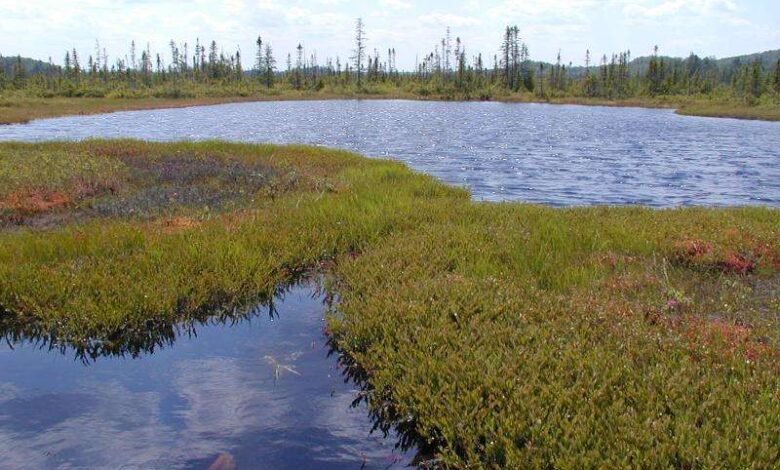
 New York State is home to several rare and fragile floating bogs and fens. These unique ecosystems feature mats of sphagnum moss and vegetation that actually float over water.
Because they are located in the northernmost range of some species, and the southernmost range of others, they have unique varieties of plants and animals, many of which are threatened by Climate Change.
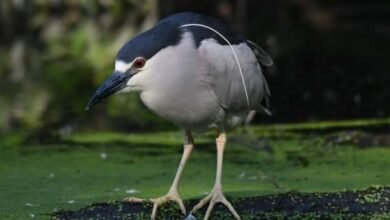
 New York’s peatland and bog lakes provide habitats for rare plants, like carnivorous sundews, and birds as diverse as Veeries, Blackburnian Warblers, Yellow-billed Cuckoos, and Scarlet Tanagers draw many birders.
They can also be home to to black bears, wood ducks, red-shouldered hawks, porcupines, fishers, beavers, and more.
Because floating bogs are incredibly fragile and host rare flora and fauna, the plant mats are easily damaged by foot traffic. When visiting, always remain strictly on designated trails or boardwalks, and carry out what you carry in.
Here’s some notable floating bogs with good visitor access:
In Northern New York, Spring Pond Bog near Tupper Lake is the second largest bog in New York State. This Nature Conservancy property contains diverse habitats and bird species. It requires a visitor pass and is currently closed until July 2026.
 Nearby however, is the largest bog in the State, the 900-acre Massawepie Mire (trail map) on the Massawepie Easement in Piercefield, St. Lawrence County, NY (open to the public September 1 through June 14).
And also nearby, Bloomingdale Bog has a long-flat trail and boardwalks along an old railroad corridor that connects Saranac Lake to Bloomingdale and travels through the bog and marshlands providing easy access to prime boreal birding habitats.
While you’ll surely find some floating bogs in the Mire and Bloomingdale Bog, the following places are more noted for these unique features. All are easily accessible trails and boardwalks.
In the more southern Adirondacks, Ferd’s Bog, on Forest Preserve lands in the Pigeon Lake Wilderness Area, just west of the hamlet of Raquette Lake, in Hamilton County, has a short boardwalk leading to an observation deck, making it a popular area for boreal bird-watching.
Out in Western New York, Moss Lake Preserve, about two miles south of Houghton in Allegany County, is a National Natural Landmark 15-acre kettle-bog lake. Visitors can walk a mile-long mostly flat trail and boardwalk to observe the delicate, floating sphagnum mat.
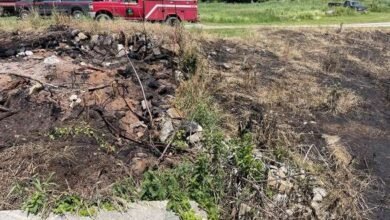
 Nearby, Hanging Bog Wildlife Management Area north of Cuba in Allegany County, is an expansive 4,500-acre area named for the large man-made bog with floating mats, which was created by the Civilian Conservation Corps (CCC) in the late 1930s. It includes an historic marker.
In Brocton, Chautauqua County, Floating Fen Preserve is a 225-acre preserve with an eight-acre floating mat of peat moss. It features an extensive hiking trail and incredible biodiversity.
Purvis Bog Natural Area in Tompkins County in the Finger Lakes is within the Cornell Botanic Gardens, this site offers the rare opportunity to observe a floating sphagnum-heath peat bog from a dedicated boardwalk.
You can find other bog lakes at the New York Natural Heritage Program website.
Remember: Floating bogs are incredibly fragile and host rare flora and fauna. They are easily damaged by foot traffic. When visiting, always remain on designated trails or boardwalks, and carry out what you carry in.
Read more about New York’s Bogs.
Illustrations, from above: Floating bog mats at Spring Pond near Tupper Lake (photo by Troy Weldy, courtesy NY Natural Heritage Program); Moss Lake Trail, Adirondack bog trail (Protect the Adirondacks); Massawepie Mire, the largest bog in New York State (Wikimedia user Seltaeb Eht); Hanging Bog Wildlife Area (Anton Schwarzmueller, 2015, courtesy Historic Marker Database).
Source link