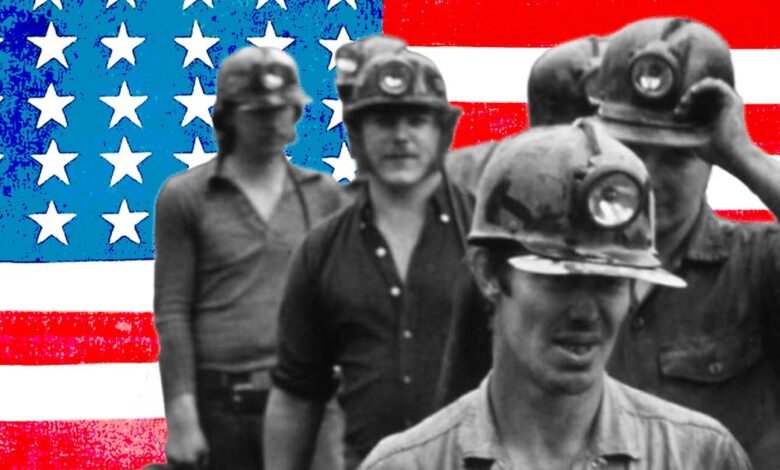
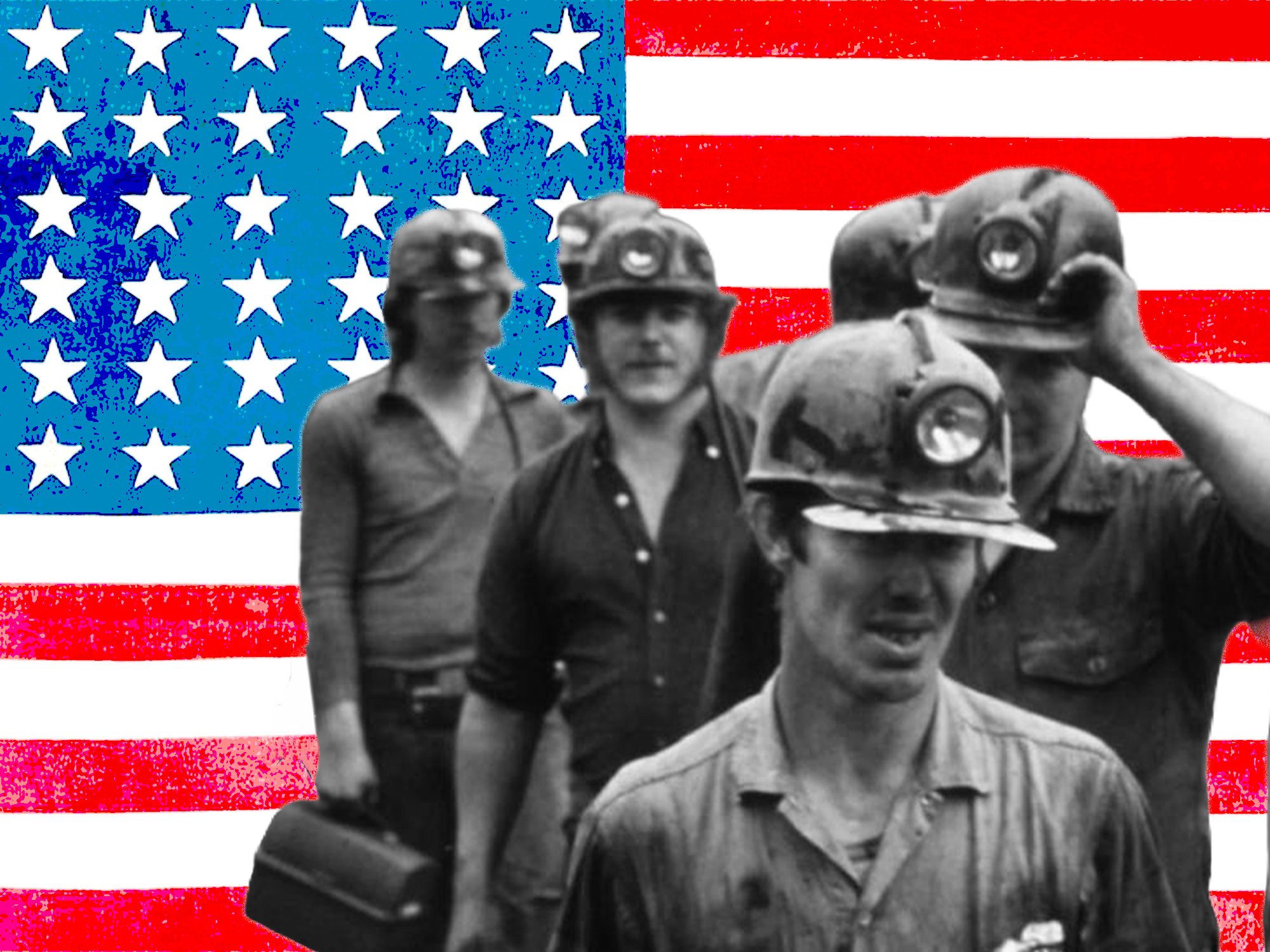
Kopple’s film itself has an elegiac quality to it, the rugged beauty in her setting and in the weathered faces of its working-class inhabitants often reading as testimony from a vanished world. Yet part of the reason why the years have been kind is that the film is so steeped in nostalgia to begin with. It’s a portrait of a community seeking not just rights in the present day, but the preservation of its heritage, and within the life-or-death, us-vs-them clarity of the central labour dispute is a resistance to our modern-day mythologising of the era. For all our efforts to delineate clearly between then and now, there’s an urgency to Harlan County, USA that refuses the captivity of the canon.
Having bedded in with the Harlan County community and built relationships over several months, Kopple lets the action play out organically, juxtaposing impassioned pro-union speeches with the intimate details of everyday domestic life, including a troubling scene where veteran miners are examined for black lung and other respiratory diseases. Her unassuming presence also lends extra power to those memorable moments in which she faces the same danger as her subjects, her involvement suddenly foregrounded clearly. A chaotic early-morning assault on the picket line sees her control over filming and her own safety pushed to the limit, as state troopers and the company’s hired “gun thugs” disperse club-wielding strikers with a hail of bullets and a cloud of smoke. Kopple has since stated in interviews that the presence of her camera tended to limit the frequency of such incidents, so she would sometimes pretend to keep shooting long after the film ran out.
Unprecedented technological advances since 1976 have made documentarians of us all, yet it would be difficult to suggest today that the camera still has the same power to prevent violence, or to bring about a fairer, more transparent society. Certainly, smartphone footage of civil unrest has served to raise awareness of previously under-exposed issues, while viral videos of police brutality and other abuses of power have often led to real retribution and accountability. But the type of trust that Kopple establishes is rare in our post-truth world. With the circulation of images now subject to the algorithmic whims of corporate-owned social feeds that thrive on isolation and division, shareability and immediate impact take precedence over context and detail, while facts can no longer be readily separated from ideology.
And the film might never run out anymore, but Harlan County coal did a long time ago. Eventually prevailing against their bosses in their struggle for a better contract, the Brookfield miners were nonetheless likely aware that their local industry was already on the way out. It has since frittered away to almost nothing, along with the community itself – unemployment in Harlan County is almost double the rate it was 50 years ago, while the population is less than half of what it was back then.
But who would want to live somewhere so remote and do such dirty, gruelling manual labour anyway? And now we’re all empowered – not to mention financially incentivised – to represent our own lives however we see fit, why do we need some humble documentarian to pay attention to us?
We now rarely encounter “gun thugs” forcing us to comply with the demands of capital, mostly because they’re no longer needed. Tech giants have successfully convinced us to do our own exploitation for them, the carrot proving to be much more effective than the stick. An era that has seen ordinary people become creators, subjects and viewers at the same time is also one in which community has become indistinguishable from an audience or a marketplace. With heavy industries like coal moved to less developed parts of the world, our attention has become the new natural resource to be extracted, processed and monetised.
Undergoing a major resurgence in the era of Netflix and YouTube, long-form documentary cinema is just as afflicted by our new economy of attention scarcity. It’s easy to imagine UMWA boss Tony Boyle’s 1974 conviction for the assassination of his rival Joseph Yablonski, a scandalous development touched upon only briefly by Kopple, serving as the main focus of a contemporary Harlan County doc, its true crime angle an ideal hook for viewers idly scrolling for stories of scams, cults and killers.
Harlan County, USA’s patient engagement with its subject jars with a contemporary media landscape that has become so fast-paced and fractured, one where politics is reduced to symbolism and performative gestures. Kopple, for her part, has retained her sense of commitment as a documentarian. Labour activism has remained a key interest in her work – she went on to cover a meatpacking strike in 1990’s celebrated American Dream, before returning again to the subject for this year’s Union Town, which premiered at Venice in September.