Dear colleagues, dear friends:
My grandfather was a historian. He was born in 1923, when the internet was not yet a thing and knowledge lived in books, newspapers, libraries, and inside people’s heads. For him, being a historian meant, to some degree, being a living archive: knowing not only the facts but what connects them, how they can be explained to make sense.
It is no surprise then, perhaps, that as a programmer, as a festival maker, I am drawn to artists who examine this sense-making, who reach back in time to retrieve an idea (a story, a song, a reality) that has not made it into our conscious, rational, productive, modern present. An idea that was left behind, or suppressed, or eradicated with purpose. These artists reach back—Sankofa—and what they bring is a challenge to us here and now, in particular to us white people, to us Europeans and people of European descent.
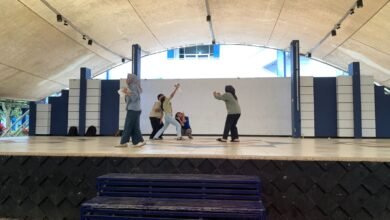
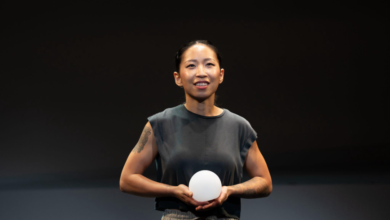
nora chipaumire, well-known to many of you, reaches back to the nineteenth century spiritual and political leader Nehanda Charwe Nyakasikana of the Shona people in her native Zimbabwe; myth, history, and resistance come alive through her dancers-singers-musicians. Émilie Monnet and Waira Nina weave Anishinaabe and Inga stories handed down through generations into a call for the protection of our forests, bringing Turtle Island and Abya Yala, Amazonia, and the Canadian boreal forest into resonance. Lukas Avendaño mourns the loss of his Zapotec language, the traditions his grandmother was not able to pass on. Amrita Hepi rewrites the history of dance from a Bundjalung/Ngāpuhi perspective, revealing the political nature of where we choose to place the beginning of a story, a people, a nation.
If we think of ourselves as teammates in the relay race of arts programming—one generation of curators handing the stick to the next, sweaty, panting, exhausted—what is it we want to have carried forward?
We all know the story of this continent does not start with three greedy ships on the horizon (Niña, Pinta, and Santa María) or a covenant with a god from faraway lands—although much could be said about how that moment catalysed a specific kind of violence, and so was a beginning of sorts. Speaking of which, a land acknowledgement is not the worst way to start: we have gathered on Lenape homeland today; I live in Tio’tia:ke/Mooniyang/Montréal/Montreal, where the Kanien’kehá꞉ka are recognised as stewards of the lands and waters. That much we know—but what does this mean for us, caretakers of arts spaces, amplifiers of stories, custodians of cultural and symbolic power? If we think of ourselves as teammates in the relay race of arts programming—one generation of curators handing the stick to the next, sweaty, panting, exhausted—what is it we want to have carried forward? Three thoughts: