 A bog is a special natural community, characterized by deep, wet, and acidic soil below an open sky. Soft sphagnum mosses squish underfoot, dominating the surface of the bog and making up the mostly undecomposed organic soil below.
The ground springs up and down with each step – a sign that the entire surface of vegetation is saturated with water and even floating in some cases.
This enchanting little world selects an eclectic group of plants that, against all odds, can survive here in such wet, exposed, and nutrient-poor conditions – something not many species can tolerate.
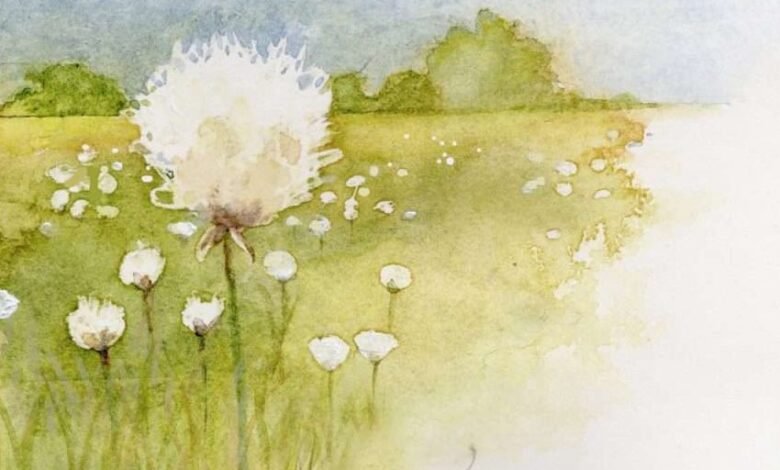
Tussock cottongrass (Eriophorum vaginatum) is one of these iconic plants. It’s in the sedge family (Cyperaceae), with straight, slender leaves that make it look quite similar to its cousins in the grass family (Poaceae).
Upright stems extend from a tuft of slender leaves, and at the end of each stem grows a mass of soft, white hairs. About an inch in length, the hairs appear to be combed together such that the plant takes on the disguise of a cotton ball attached to the top of a blade of grass as tall as garden boots.
Tussock cottongrass is distinct from other cottongrass species because it has only one white cotton ball per stalk.
 Tawny cottongrass (E. virginicum) also appears to have a single cotton ball inflorescence, but it gets its name from its distinct copper-colored hairs, which can help distinguish the two species.
The long stalks of these cottongrasses wobble and wave in soft wind throughout the summer, a sprinkling of stars across the flat expanse that makes you feel like you’ve wandered into some kind of heaven.
Not limited to just bogs, this plant is also found on Northeast mountaintops, sprouting between rocks across alpine zones. And it’s not the only species that is found both in bogs and alpine areas; black spruce, leatherleaf, and Labrador tea also straddle such seemingly different worlds.
These alpine peaks are the first to hold snow in late fall and the last to lose it when the weather warms. Winds from the valleys topple or stunt the trees so that they form only a low hedge.
Alpine zones and bogs have much in common, ecologically. They both are mostly treeless, or at least canopy-less, making them similar in terms of exposure.
Both habitats lack a consistent supply of nutrients and get water only from rain and snow, which is acidic in the Northeast, rather than groundwater, which usually carries the minerals most plants need.
And alpine zones and bogs are often much colder and wetter than their surroundings.
The bog and the alpine are ecological battlegrounds in comparison to the dry, nutrient-rich slopes of northern hardwood forests. While saturation and acidity are typically considered obstacles for plants, they also make these bogs and alpine areas breeding grounds for evolution.
High stress environments beget special features in plants to make them hardy in these especially challenging conditions. And like many of us who live in New England, the species that live here fare well in these weird, wet, and cold natural communities.
Despite being officially described as a wetland-obligate plant, meaning it is nearly always found in wetlands, tussock cottongrass creates its own microhabitat, allowing it to tolerate a wide variety of conditions.
True to its name, it creates a tussock, or a thick clump of its own stems and leaves. Each plant grows into a bulbous bouquet of slender grass-like leaves, which, over time, raises the plant slightly above its surroundings.
In wetlands, the tussock creates an elevated surface for the species to grow on as the water table rises throughout the growing season. In the alpine, the tussock growth form provides protection from harsh winds and a source of nutrients from the accumulated plant matter.
A cottongrass seed can even germinate on top of an older tussock, making the tussock a nursery for itself, like an old rotten log in the woods becoming the perfect spot for a tree seedling.
Next time you’re out in a bog or the alpine, consider the struggles and adaptations of the plants that live there. How do they handle the wind and cold? How do they handle the wetness and acidity?
If you find tussock cottongrass swaying in the wind, take a moment to appreciate all that it does to survive in these harsh environments.
Read more about New York’s bogs, wetlands or alpine areas.
Emily DeAlto and Matthias Sirch are ecologists living in Burlington, Vermont. Illustration by Adelaide Murphy Tyrol; photo of Tawny cottongrass (Eriophorum virginicum) in Vermont, 2020 by Wikimedia user Joshua Lincoln. The Outside Story is assigned and edited by Northern Woodlands magazine and sponsored by the Wellborn Ecology Fund of New Hampshire Charitable Foundation: nhcf.org.
Source link