 Ulysses S. Grant’s ancestors first came to America in 1630 when Englishman Mathew Grant landing in Dorchester, Massachusetts. Grant was always proud of his forebears, but the most important individuals in his life were his parents.
His father Jesse Root Grant (1794-1873) was an ardent abolitionists who spent part of his early years living in the home of the father of the John Brown. His mother Hannah Simpson Grant (1798-1883) came from Pennsylvania parents who were die-hard Jacksonian Democrats.
The two married in June of 1821, and their first born, Hiram Ulysses Grant, was born on April 27, 1822 in Point Pleasant, Ohio. It was only later when the congressman who nominated him for West Point erroneously recorded him as Ulysses S. Grant that he was able to shed his true initials: H.U.G.
Grant’s father sent him to the United States Military Academy where he excelled in mathematics. The last year at West Point he roomed with Frederick Dent the son of a slave-holding family from St. Louis, Missouri.
Despite his and his family’s opposition to slavery, he regularly rode to the Dent’s White Haven Plantation and there he met Julia Boggs Dent (1826-1902). They agreed to marry in May of 1844, but the Mexican-American War intervened, and the marriage did not happen until August 22, 1848.
The marriage resulted in four children: three boys and a girl. Because Grant remained in the army, the family was frequently separated, and Grant suffered from depression.
When he was stationed far from his family at Fort Humboldt, California, it is rumored that he drank so heavily that his commanding officer forced him out of the army.
He returned to St. Louis and unsuccessfully worked to earn a living in a variety of occupations. In 1860 he took a job as a clerk in his father’s Galena, Illinois tannery business.
 While he was living in Galena, the Civil War began, but Grant had difficulty getting into the conflict. Finally, his success as an Illinois records clerk resulted in the state’s governor giving him command of an undisciplined regiment, to reform them.
He did, and from that point on, his track was upward. He gained success at places like Forts Henry and Donelson, Shiloh, Vicksburg, and Chattanooga. Lincoln named him commander of all United States armies in 1864. His defeat of Robert E. Lee in Virginia made him a national hero.
When the presidential election of 1868 came along, Grant had no real rival for the office, and soundly defeated former New York Governor Horatio Seymour. He was re-elected in 1872, easily defeating New York newspaper editor Horace Greeley.
He was also the only president between Abraham Lincoln and Lyndon B. Johnson to try to insure full rights as citizens for formerly enslaved Black Americans.
He worked hard to destroy the Ku Klux Klan and also tried to deal with the difficult economic Panic of 1873. Grant had to deal with corruption during his time in office, although he himself was never accused of any wrong doing.
 When he completed his term in office, Grant became the first American president to make a world tour, being received by enthusiastic crowds and world leaders throughout Europe and Asia. Upon his return, there were numerous calls for him to run for the presidency again in 1880, but this attempt proved unsuccessful.
Grant then became president of a Mexican-American Railroad Company. All sorts of publishers also wanted him to write his memoirs, but he repeatedly refused. Then in 1883, he fell on the ice outside his New York home and permanently damaged his left leg.
A charlatan fleeced him out of all his money, forcing him to agree, finally, to write his memoirs. He agreed to work with publisher-business agent Mark Twain. Then because of years of smoking cigars, he developed throat cancer.
Grant’s Cottage
In spite of his terrible pain, he was able to finish his memoirs, dying just days after finishing them on July 23, 1885 at what is now Grant Cottage National Historic Landmark is a cottage on the slope of Mount McGregor in the town of Moreau, in Saratoga County, NY, not far from Saratoga Springs, a once popular summer resort.
His 1885 funeral was and remains the largest such event in American history, and “Grant’s Tomb” remains an important fixture in American popular consciousness.
Grant’s Cottage will open for the season on Saturday, May 2, 2026. Access to the site grounds, Visitor Center, a self-guided audio tour, and gift shop are free and open to the public from Wednesday through Sunday. The entrance gate opens at 9:30 am and closes at 3:30 pm.
Cottage tours are approximately 45 minutes long and available 7-8 times a day. Check-in for tours is at the Visitor Center. You can book online to ensure your desired tour start time, or book the next available tour at the Visitor Center upon arrival.
Living History Tours (1 hour) are available on Friday and Sunday at 3:30 pm. Book tours here.
To learn more about visiting the site, see their website.
A version of this essay was first published by the Massachusetts Historical Society.
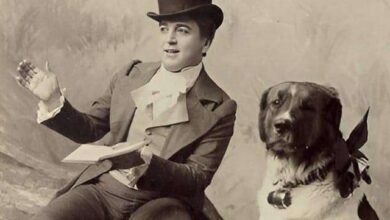
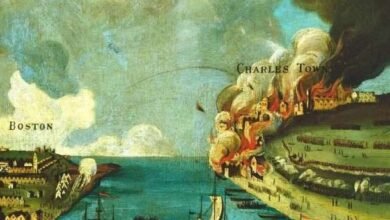
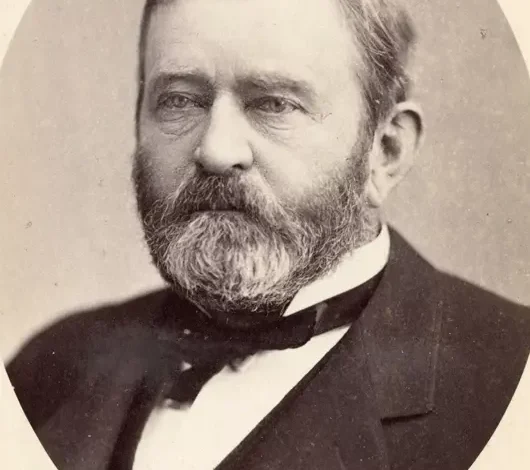
Illustrations, from above: Ulysses S. Grant Carte de visite, circa 1861-1865 (Massachusetts historical Society); Grant with his war council surveying maps during the Civil War (colorized by Retronaut); and Grant in the early 1880s (cabinet card photo by Abraham Bogardus, New York City).
Source link