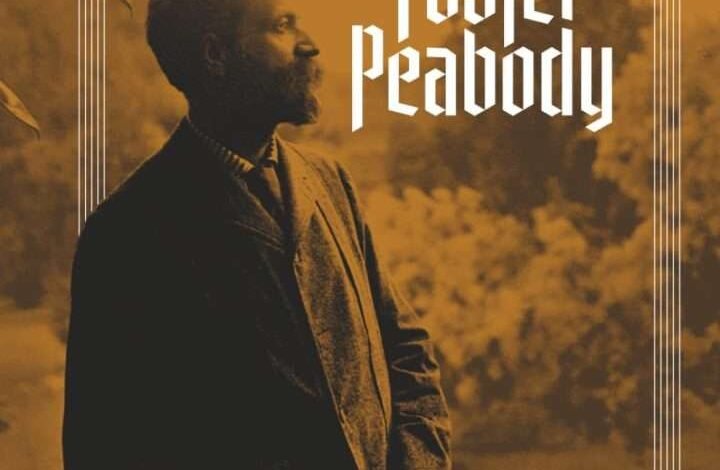
 Glen Underwood, the author of the recently published Discovering George Foster Peabody (Abenia Cottage Press, 2025) was at the Lake George Historical Association recently to discuss the life and legacy of the banker and philanthropist. The program included the unveiling of a portrait of Peabody that will hang in the museum.
Appropriately enough, the museum overlooks Shepard Park, named in honor of Peabody’s close friend, Brooklyn politician Edward Morse Shepard (1850-1911). Shepard is remembered at Lake George today largely because the Village park bears his name. Peabody, who actually paid for the park and gave it to the Village, has fared less well.
Yet George Foster Peabody (1852–1938) not only preserved Shepard Park for future generations, he also had a hand in preserving Wiawaka, Prospect Mountain, Hearthstone Point Campground, Diamond Island and French Point, all for the use of the public. Peabody also recruited the Rev. E.M. Parrott for St. James Episcopal Church and his nephew Charles Peabody to design the Lake George Club.
Peabody is also far less well known than Spencer and Katrina Trask, whom he met in the 1870s. In 1881 he became a partner of Trask’s in the investment banking house that bears his name and in 1921, he married his widow. It’s possible that it was Peabody who introduced the Trasks to Lake George, rather than the other way around.
 Edward Morse Shepard, with whom Peabody formed the Young Men’s Democratic Club in Brooklyn in 1881, began renting a house on Lake George in 1891. That same year, Peabody bought Price Manor, which he renamed Abenia and installed his mother as its hostess.
(His brother, Charles Peabody, bought another Price property in 1891, this one from photographer Alfred Stieglitz’s father; today it faces I-87’s exit 22 from Route 9N.)
The Trasks bought the Saratoga property that would become the Yaddo, their estate and after their deaths, an artists’ colony, in 1881. They did not acquire property on Lake George until 1903, when, with the aid of Peabody himself, they purchased the old Crosbyside Hotel.
Peabody and the Trasks immediately turned that property over to the founders of Wiawaka as a vacation retreat for working women, which it remains to this day.
The Trasks bought Three Brother Islands in 1906. One year before that, in 1905, Peabody purchased Prospect Mountain. The property consisted of a 160 to 174-acre sized lot, which included the summit, the Mountain House hotel and the incline railroad that was built in 1895.
It’s not clear what Peabody intended to do with the property other than allow its views to be enjoyed by the public. It’s been said that he had heard that the hotel was to become a gambling casino, a use he found objectionable.
The mountain was, after all, a popular destination for the women of Wiawaka. He might have retained the railroad, but after the US entered the First World War, he scrapped the railway and donated the steel to the war effort.
 We do know that Peabody did not wish Prospect Mountain to become “forever wild.” State law, however, required that any property in any county within the Blue Line acquired by the state become part of the Forest Preserve.
It was not until 1925 that the legislature found a way for Peabody to donate the land to the state without it reverting entirely to wild forest land.
That year, a bill was adopted that authorized the state to accept lands within the Forest Preserve “for park or reservation purposes.” Two months after the bill was signed into law, Peabody gave his Prospect Mountain lands to the state. Little more than forty years later, the Prospect Mountain Highway opened.
In 1926, Peabody sold 25 acres north of Abenia to New York State, also for use as a public park. A year later, work began on Hearthstone Point Campground.
Peabody had sold the estate to New York Times publisher Adolph Ochs in 1918. It’s not clear if the land that became Hearthstone was a part of Abenia retained by Peabody, or a separate purchase altogether.
Peabody’s friend E. M. Shepard was once viewed as a potential candidate for the presidency. Peabody himself, however, played an even more influential role in national affairs.
He was among those responsible for the nomination of Woodrow Wilson as the Democrats’ candidate for president in 1912; after he was elected, Wilson offered Peabody the post of Secretary of the Treasury. Peabody declined, stating that he had “a life-long conviction that I can render my quota of public service outside the constraints of office.”
Peabody was also a trusted counselor to Franklin D. Roosevelt. Their relationship dated back to Roosevelt’s years as a state legislator and deepened after Roosevelt was struck by polio. Peabody advised Roosevelt to visit Warm Springs. The two became partners in the development of a therapeutic center there, as well as neighbors.
 A career as long and as varied as Peabody’s can’t help but have unexpected and unanticipated ramifications, and the affair of the Reverend Melishes is one of those.
The Reverend J. Howard Melish was recruited by Peabody in 1903 to become the pastor of the Church of the Holy Trinity in Brooklyn Heights, a post he would retain until 1949.
Peabody, who was a pillar of that church, also suggested that he buy his own property on Lake George, which he did, building or buying a house in Lake George Village on a site now occupied by Scotty’s motel and Scrimshaw Estates.
During his years on Lake George, Melish was a controversial figure, allied with John Apperson, Irving Langmuir, Kenneth Reynolds and others in the effort to force the mill at the foot of the lake to cease manipulating the lake’s water levels for its own benefit.
But he was even more controversial in Brooklyn. In 1949, he was ousted from his post at the Church of the Holy Trinity, largely because he would not fire his assistant rector, who also happened to be his son.
The Rev. William Howard Melish was chairman of the National Council of American- Soviet Friendship, a target of Senator Joseph P. McCarthy’s anti-Communist campaign.
The only way the Episcopal bishop could rid himself of Melish the younger was to disband George Foster Peabody’s old church, which he did in 1957.
According to the late Bill Gates, the local historian, someone set fire to the family’s Lake George house in the 1970s. Peabody and Melish the elder “found themselves akin on social issues, and spent many hours discussing problems of the day,” according to an early biographer of Peabody’s.
 Perhaps Peabody would have sympathized with Melish in his fight with his congregation and his bishop, despite the fact that he was among the foremost capitalists of the era.
After Peabody’s death in 1938, the Rev. Melish joined with John Apperson and a partner of Peabody’s at Spencer Trask & Co., Lake George Club president C. Everett Bacon, to protect the 42-acre French Point, at the base of Tongue Mountain, in Peabody’s memory.
After raising the funds necessary to purchase the former General Electric worker’s retreat, the “George Foster Peabody Memorial Committee” donated the land to New York State with the explicit direction that it be added to the Adirondack Forest Preserve.
On the site is a bronze plaque that reads: “These forty-two acres are a gift to the people of the state of New York in memory of George Foster Peabody.”
Perhaps Peabody deserves a more visible memorial on Lake George than the plaque on French Point or even a portrait in the Lake George Historical Museum.
Arguably, he did more to ensure the average citizen’s enjoyment of Lake George than any other single individual.
Book Purchases made through Bookshop.org support both your local independent bookstore and New York Almanack’s mission to report new publications relevant to New York State. Purchases via this Amazon link also support the Almanack.
A version of this article first appeared on the Lake George Mirror, America’s oldest resort paper, covering Lake George and its surrounding environs. You can subscribe to the Mirror HERE.
Illustrations, from above: Discovering George Foster Peabody book cover; Peabody’s Abenia mansion at Lake George, ca. 1905-1910 (photograph by Gustave Lorey); Prospect Mountain’s inclined cable railroad ca. 1900; Rev. Dr. John Howard Melish with his son; and George Foster Peabody in his study.
Source link