 The Miyawaki mini forest method (also known as pocket forests) was developed by Japanese botanist Akira Miyawaki and has been successfully applied, typically on degraded land and without humus, in thousands of places across the globe.
The Miyawaki method involves planting native trees and shrubs densely in a small plot about the size of a basketball court and providing them with mycorrhiza. It has great local benefits.
This strategy mimics a forest’s response to a disturbance, such as a fallen tree — in the newly created space, many plants sprout together and compete for resources. However, a mini forest grows and matures much more quickly than a natural forest. While most forests can take centuries to grow and mature, a mini forest reaches the same stage in just 20-30 years.
Mini forests can help increase an area’s biodiversity and create habitat for native pollinators, organisms living in the soil, and other wildlife. Since they are so densely planted, mini forests absorb carbon at a faster rate than other forests. They also can provide shade and increase the air’s moisture levels having a small cooling effect.
In the book Mini-Forest Revolution Hannah Lewis presents the Miyawaki Method’s unique approach and explains how tiny forests as small as six parking spaces grow quickly and are much more biodiverse than those planted by conventional methods.
 She explores the science behind why Miyawaki-style mini-forests work and the myriad environmental benefits, including: cooling urban heat islands, establishing wildlife corridors, building soil health, sequestering carbon, creating pollinator habitats, and more.
Today, the Miyawaki Method is witnessing a worldwide surge in popularity. Mini-forests that have sprung up across the globe and the people who are planting them ― from a young forest along the concrete alley of the Beirut River in Lebanon, to a backyard forest planted by tiny-forest champion Shubhendu Sharma in India.
This spring, the New York State Department of Environmental Conservation (DEC) is creating a mini forest at Five Rivers Environmental Education Center in Delmar, Albany County, NY. The Five Rivers mini forest will provide community science opportunities and hands-on learning experiences for visitors.
DEC is seeking volunteers to help plant the mini forest at Five Rivers during an upcoming Saturday this spring, with the date dependent on weather.
You can sign up on their website and receive updates on the planting date. This project is funded through a grant from AT&T Foundation to Friends of Five Rivers.
Book Purchases made through this Amazon link support the New York Almanack’s mission to report new publications relevant to New York State.
See more new books HERE.
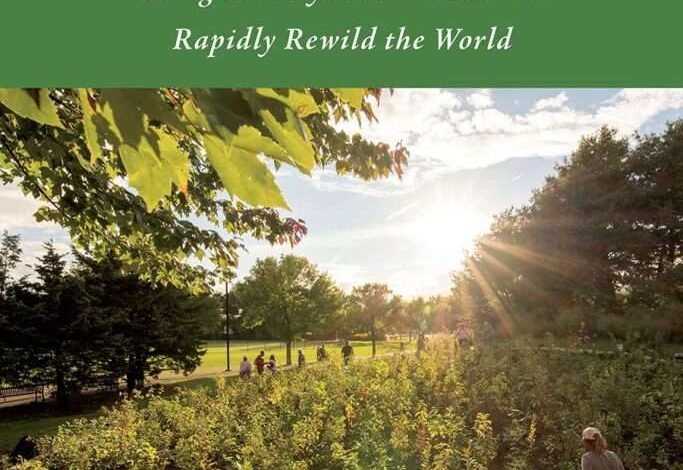
Photo of mini forest provided by Chelsea Green Press.
Source link